1. Choose a Distinctive Name, Not a Descriptive One
Names with strong consumer appeal often struggle to pass trademark examination. A title like "Dubai Shawarma House" tells customers what the business sells, which is why the Trademark Office will likely refuse it. No business can own words that every competitor needs to describe the same food.
Distinctiveness determines application success. Invented words, ordinary words used in unusual contexts, and names that hint at the service without stating it directly register comfortably. Names built strictly from the cuisine type, the city, or the generic dish rarely succeed.
A simple test determines viability: could a competitor reasonably need these exact words to describe their own restaurant? If the answer is yes, the name needs revision. If a descriptive name is already chosen, adding a distinctive logo or an invented word can strengthen the application. Address this before ordering signage.
2. Run a Trademark Search Before You Commit
A trademark search costs a fraction of a rebrand. Before signing a lease, printing menus, or purchasing a domain name, check the Ministry of Economy register for identical and similar marks in the relevant classes.
The restaurant sector is crowded, and the Trademark Office evaluates the overall impression of a name rather than an exact letter match. A name that sounds close to an existing mark in the same class presents a legal risk. Existing marks can block applications, trigger legal oppositions, or lead to infringement claims after trading begins.
Search wider than the primary restaurant class. A bottled sauce brand registered in Class 30 can create conflicts for a restaurant registered in Class 43 if the names cause customer confusion. Reviewing emirate trade name registers and delivery platforms during the search phase helps flag conflicting brands before they reach the official register.
3. Register Before You Open, Not After
Most trademark disputes begin in the gap between opening a restaurant and filing the paperwork. Once a concept becomes public on social media, delivery apps, or press releases, third parties can view the name and file an application first.
The legal timeline supports early filing. After examination, the Ministry publishes accepted marks in its official gazette, giving third parties 30 days to file an opposition. Protection lasts for ten years from the filing date, meaning earlier applications secure priority in the queue.
Current administrative procedures include expedited examination options, and businesses registered under national small and medium enterprise programs may qualify for fee reductions. Paying for speed is an option, but priority still belongs to the first applicant.
4. Protect Your Logo Separately From Your Name
Registering a name and registering a logo serve two distinct legal purposes:
- Wordmark Registration: Protects the text in any font, color, or styling, preventing competitors from using the name in alternative lettering.
- Figurative Mark Registration: Protects the visual design as an image, preventing competitors from copying the visual style while changing the words.
Most restaurants require both types of registration. Relying solely on a combined logo leaves the text name weakly protected.
Original artwork receives a second layer of protection under Federal Decree-Law No. 38 of 2021 on Copyright and Neighbouring Rights. Original designs receive automatic protection upon creation without requiring registration. This covers logo illustrations, menu layouts, food photography, and interior graphics. A copied logo can be challenged as both trademark infringement and copyright infringement. To secure this protection, ensure design agencies assign copyright in writing and keep dated design files.
5. Think About Menu Item Names and Signature Dishes
Signature dishes can be registered if the names are distinctive. Invented names for house creations succeed, while generic terms like "Grilled Chicken Platter" do not.
Recipes cannot be registered because trademark law protects brands rather than methods. If a preparation technique or spice blend holds commercial value, protect it as a trade secret using confidentiality clauses in kitchen staff contracts, supplier agreements, and restricted access to the method.
Restaurant groups should register the names customers use to order items while keeping production methods protected by contract.
6. File in the Right Trademark Classes
Class 43 covers restaurant services, which serves as the starting point and often suffices for single-location venues.
However, businesses expanding beyond the dining room require additional categories:
Class | What It Covers | When You Need It
Class 43 | Restaurant, café, and catering services | Every restaurant. Start here.
Class 30 | Coffee, tea, bakery goods, sauces, spices, prepared dishes | Own-brand coffee, bottled sauces, retail bakery items
Class 29 | Meat, dairy, preserved, and prepared foods | Packaged ready meals, own-brand dairy
Class 32 | Juices and other non-alcoholic drinks | Bottled drinks, own-brand juices
Class 35 | Retail services and business management services | Franchising, retail arms, delivery-only brands
Multi-class applications allow businesses to bundle these categories into a single file, streamlining paperwork and renewal dates.
7. Register Before You Franchise
UAE regulations governing commercial agencies and franchising treat registered agreements differently from unregistered ones. Registered agreements provide statutory clarity on termination and compensation, whereas unregistered agreements rely on standard contract law.
Trademark registration makes a franchise package viable. A franchise agreement licenses brand rights, and franchisors cannot license assets they cannot prove they own. Prospective legal counsel for franchisees will request a registration certificate rather than an application number.
Record trademark licences with the Ministry of Economy to simplify enforcement and customs actions, and complete registrations before negotiating agreements.
8. Watch for Copycats Across the UAE and GCC
Businesses should check the Ministry gazette for similar applications, review emirate economic department trade name registers, and monitor delivery platforms and social media where copycat venues appear.
When infringement occurs, several legal routes are available:
- Civil Claims: Secure court orders to stop unauthorized use and claim financial damages.
- Criminal Complaints: Under Decree-Law No. 36 of 2021, penalties apply as follows:
Offences and penalities:
Counterfeiting or imitating a registered mark: AED 100,000 to AED 1,000,000
Knowingly selling or using an infringing mark: AED 50,000 to AED 200,000, and up to one year in prison
- Customs Recordation: Importers of packaged goods can request customs authorities to hold suspect shipments for up to 20 days.
Trademark rights are strictly territorial. While Decree-Law No. 36 of 2021 aligns with the GCC Unified Trademarks Law, it harmonizes the legal framework rather than the registers. Protecting a brand in Saudi Arabia, Qatar, or Oman requires independent filings in each country.
9. Renew On Time
Trademark registration is not a one-and-done administrative task. UAE trademarks last for ten years from the filing date and can be renewed for subsequent ten-year terms, supported by a statutory grace period after expiry.
A separate risk involves non-use cancellation. If a mark remains unused for five consecutive years, third parties can apply to cancel it. This affects defensive filings, such as classes registered for product lines that never launched or secondary concepts that closed.
Maintain two internal practices: track renewals based on the filing date rather than the registration date, and archive dated evidence of use for every held class, including menus, packaging, invoices, and advertisements.
Read more about the entire renewal process.
10. Don't Confuse Trademark With Trade License or Trade Name
Many restaurant operators confuse trade licenses with trademark ownership.
Feature | Trade Name | Trademark
Issued by | Emirate Department of Economic Development | Ministry of Economy and Tourism
Function | Lets you operate a business under that name | Grants exclusive rights in the name as a brand
Defense to infringement | No | Yes, it is the right being enforced
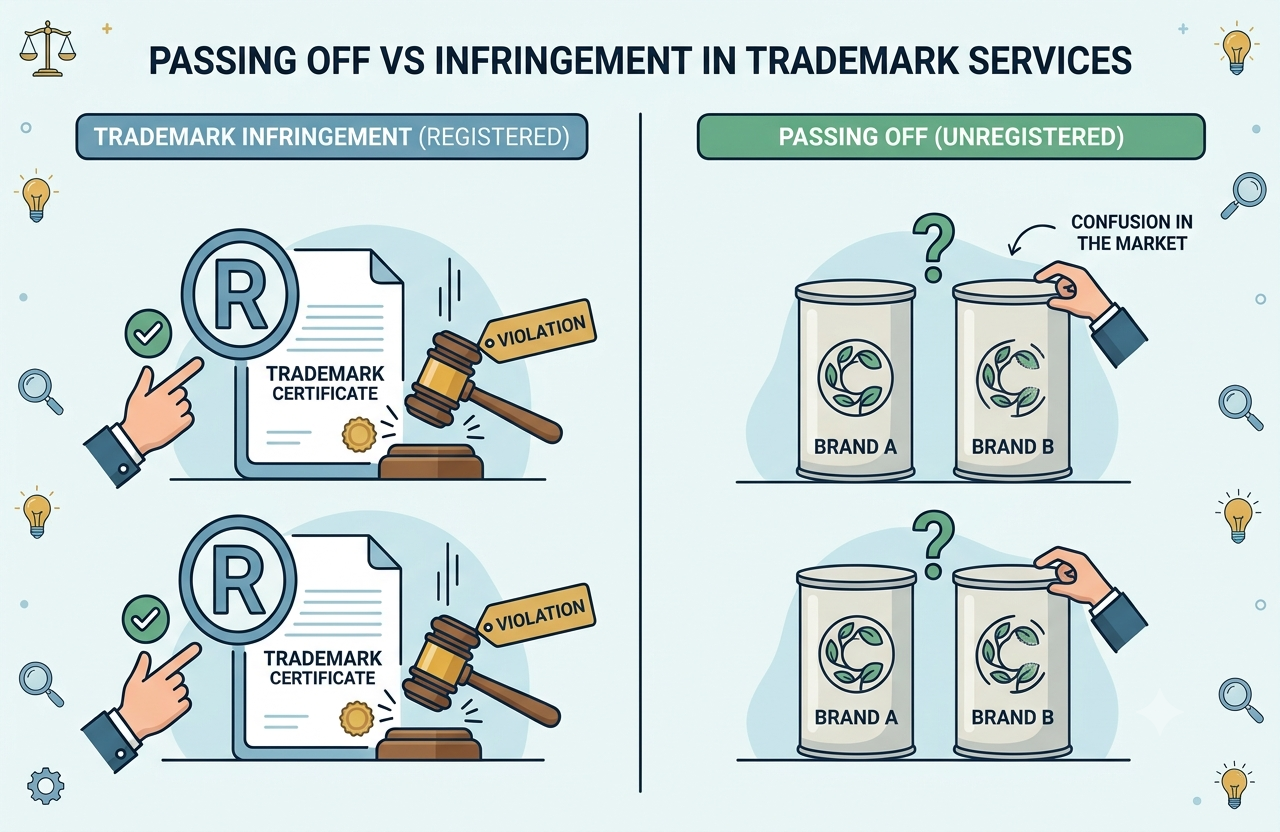
A court ruling demonstrated this principle when the Abu Dhabi Commercial Court and Court of Cassation decided in favor of a global brand against a local retailer trading under a matching name. The court ordered the cancellation of the infringing trade name from commercial registries and digital channels. The registration grants ownership, while the licence only permits trading.
Where to Start
Restaurants opening within six months should follow a clear sequence:
1. clear the name with a proper search,
2. file the wordmark and logo as separate applications, cover Class 43 along with expansion classes, and
3. schedule renewal dates from the filing date.
4. Businesses already trading without registration should verify whether third parties have filed the name.