Selecting the right cosmetic trademark class represents a vital legal milestone for any growing beauty venture. Trademark registrations confer statutory exclusivity only for the precise goods and services claimed in your filing. Registering under the wrong heading leaves a dangerous void that direct rivals can leverage to sell look-alike goods under an identical name.
Whether you lead an indie skincare label, a colour cosmetics startup, a private-label enterprise, or a professional salon launching an in-house collection, classification errors generate costly disputes. T
his practical guide covers the primary trademark class for cosmetics, highlights essential companion categories, clarifies the line separating cosmetic and medicated formulas, and explains how Abou Naja IP builds lasting protection for modern beauty brands.
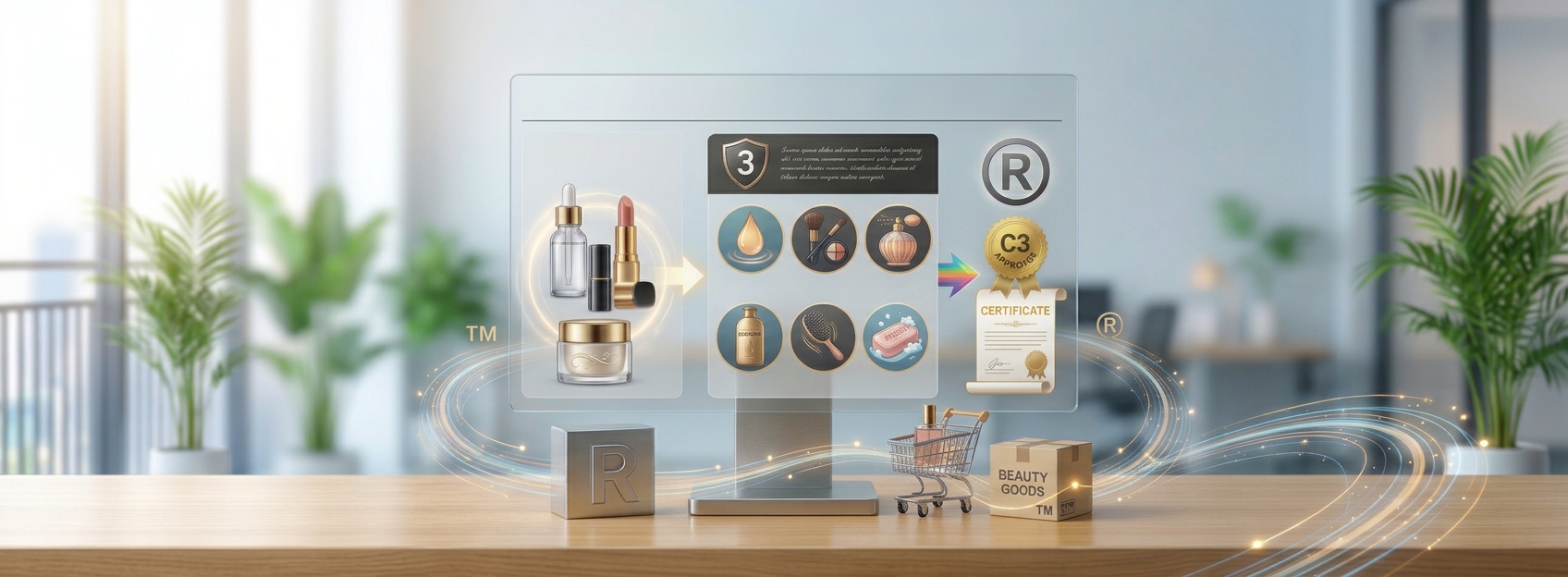
Quick Answer: Cosmetics are registered in Trademark Class 3, which covers makeup, skincare, perfumes, hair care, nail products, and toiletries. Depending on their business model and product lineup, beauty brands often file across Classes 5, 8, 21, 35, and 44.
Which Trademark Class Covers Cosmetics?
Cosmetics are classified under Trademark Class 3 within the Nice Classification, an international framework maintained by the World Intellectual Property Organization (WIPO) that sorts goods and services into 45 distinct classes. Class 3 functions as the bedrock trademark class for beauty products, establishing commercial priority over personal care formulations worldwide.
Class 3 Explained in Simple Terms
Class 3 of trademark encompasses non-medicated cosmetics, personal hygiene items, and common toiletry preparations. It protects items applied externally to the human face, hair, nails, and skin to clean, perfume, condition, and enhance appearance without modifying physiological structures or treating illnesses.
While Class 3 also houses household laundry detergents, scouring solutions, and polishing compounds, beauty and personal wellness enterprises focus specifically on the cosmetic and grooming segments listed in the official schedule.
How the Nice Classification Groups Beauty Products
The Nice Classification system groups commercial items by biological function, raw material, and consumer utility rather than retail shelving convenience. Consequently, complementary beauty products packaged together inside a single gift set regularly fall into separate legal classes.
A tinted lip balm belongs in Class 3, while the application brush belongs in Class 21, and the vanity bag holding them belongs in Class 18. Trademark protection does not jump automatically between related categories. The current edition in force is NCL 13-2026, which took effect on January 1, 2026, and governs all new trademark filings.
Products Covered Under Trademark Class 3 (Cosmetics)
Class 3 encompasses a comprehensive range of non-medicated personal care and grooming preparations. Filing for Class 3 trademark cosmetics requires organizing your products into recognized commercial categories.
Makeup and Colour Cosmetics: Formulations in this segment provide aesthetic enhancement across the eyes, lips, and face. Applications should list specific goods, including foundation makeup, lip stains, and eye crayons, rather than relying on generic descriptions.
Skincare Products: Skincare items include topicals designed to hydrate, exfoliate, and protect the skin barrier. Formulations must remain non-medicated to qualify for Class 3, using terms like cosmetic facial serums and moisturizing lotions.
Perfumes, Fragrances, and Essential Oils: Fragrance lines cover aromatic extracts, perfumed body sprays, and scented waters. Essential oils fit within this category when intended for cosmetic applications, whereas therapeutic extracts belong in Class 5.
Hair Care Products: This category includes non-medicated preparations that wash, condition, treat, and style human hair. Shampoos, texturizing sprays, and chemical-colouring preparations belong here, provided they claim no clinical scalp remedies.
Nail Care Products: Manicure solutions encompass colour or lacquers, artificial tips, and cuticle balms. Base preparation fluids like nail polish removers and cuticle-softening liquids fall directly into Class 3.
Personal Care and Toiletries: Routine hygiene items, including body washes, antiperspirants, and dental pastes, sit here. These products must focus on cleanliness, body odour control, and grooming rather than pharmaceutical treatment.
Sun Care and Self-Tanning Products: Cosmetic sun lotions, bronzers, and gradual self-tanning preparations belong in Class 3. The goods wording should specify cosmetic sun protection to prevent conflicts with medical registries.
Lash and Brow Products: Aesthetic eye enhancements like false lashes, adhesive glues, and styling brow gels belong in Class 3 because their sole purpose is aesthetic appearance rather than biological alteration.
Other Trademark Classes Beauty Brands Should Consider
Beauty brands often expand beyond topical bottles and compacts. Broadening into electronic tools, application devices, digital apps, and salon services requires selecting secondary beauty brand trademark classes.
Class 5 (Medicated Skincare and Ingestibles): Class 5 covers items targeting medical skin conditions, acne preparations, and ingestible wellness supplements like collagen powders and biotin gummies.
Class 8 (Manual and Electric Grooming Tools): Class 8 covers hand-operated implements like nail clippers, tweezers, manual razors, and electric flat irons or curling tongs.
Class 9 (Beauty Apps and Virtual Software): Modern brands deploying digital shade-matching tools, skin diagnostics, or virtual augmented reality try-on software require Class 9 coverage.
Class 10 (Therapeutic and Clinical Devices): Tools claiming to stimulate cellular repair, alleviate skin inflammation, or deliver clinical dermatology treatments belong under Class 10.
Class 11 (Heated Appliances and Steamers): Electrical appliances that dry, steam, or heat, such as salon hair blowers and warm-mist facial steamers, are registered under Class 11.
Class 18 (Cosmetic Pouches and Travel Cases): Secondary containers used to store or transport cosmetics, such as branded vanity cases and zippered makeup pouches, sit within Class 18.
Class 21 (Brushes, Sponges, and Containers): Essential for any makeup trademark class strategy, Class 21 covers application tools like blending sponges, blush brushes, and empty cosmetic compacts.
Class 26 (Hair Pieces and Extensions): Structural hairpieces, synthetic clip-in extensions, and styling fasteners are classified separately from hair care liquids.
Class 35 (Retail and E-Commerce Services): While Class 3 covers the product label, Class 35 protects retail storefronts and e-commerce websites selling beauty supplies.
Class 41 (Education and Training): Beauty educators, makeup artists running public masterclasses, and digital academies teaching cosmetology require Class 41 protection.
Class 44 (Salons, Spas, and Aesthetic Clinics): Hands-on professional beauty services, including lash applications, hair styling, skin treatments, and aesthetic clinic procedures, belong in Class 44.