There are three main types of patents issued by the United States Patent and Trademark Office (USPTO), utility patents, design patents, and plant patents. Utility patents protect how a new invention works or is used, design patents protect how a product looks, and plant patents protect newly discovered or invented plant varieties.
However, many new inventors confuse patent types with patent application types (such as provisional vs. non-provisional applications). Understanding the distinction is the first critical step in securing comprehensive patent protection for your intellectual property.
This guide breaks down the different types of patents, the various ways to apply for them, and how to determine exactly which one you need to file.
What is a Patent?
A patent is a government-granted exclusive right that allows an inventor to exclude others from making, using, selling, or importing an invention for a limited time. In exchange for this monopoly, the inventor must publicly disclose the details of their creation.
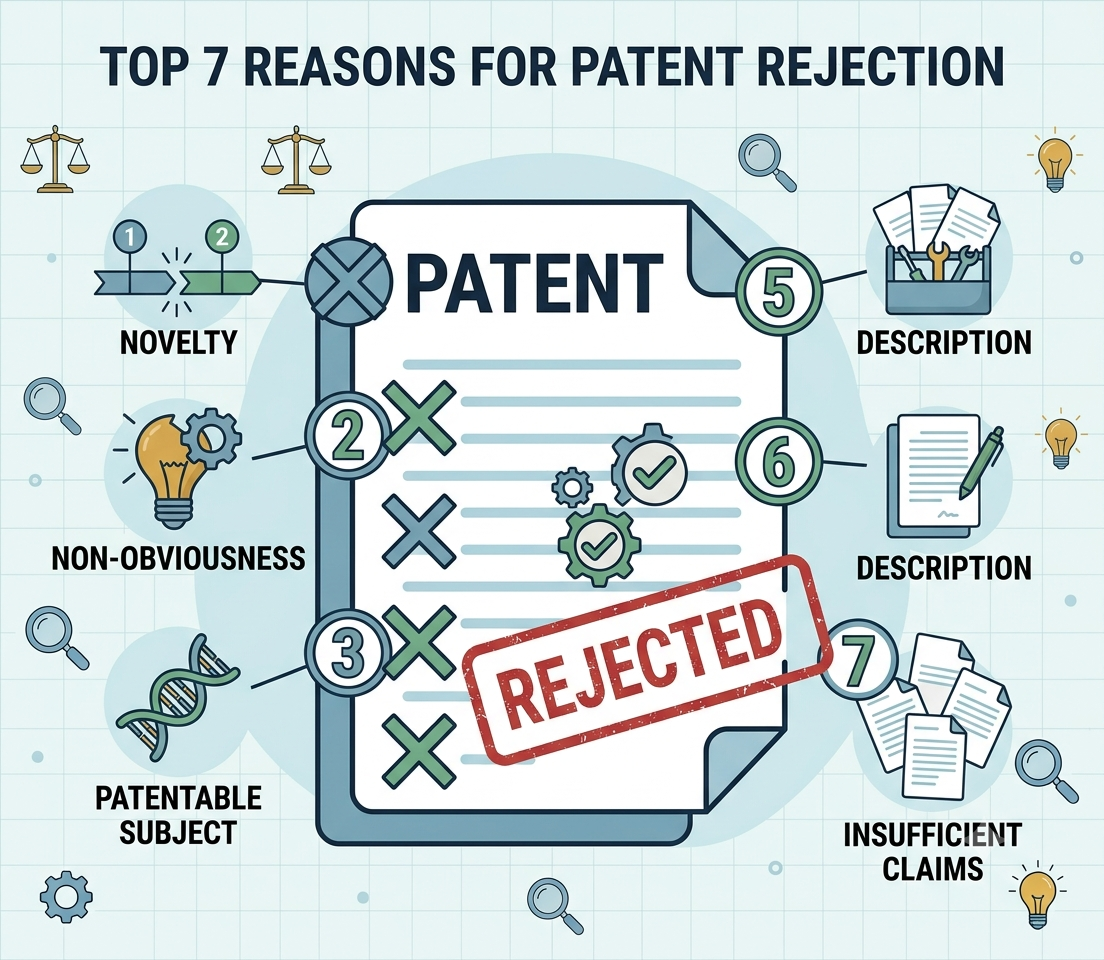
For an invention to clear the hurdle of patent eligibility, it must meet three core criteria:
Novelty: It must be entirely new and not previously known to the public (no prior art).
Non-obviousness (Inventive Step): The invention must not be an obvious improvement to someone with ordinary skill in that specific field.
Industrial Applicability (Utility): It must be useful and capable of being manufactured or used in an industry.
Check the entire process of patent registration before submitting any form.
The 3 Main Types of Patents
Patent Type | What It Protects | Examples | Duration (U.S.) | Complexity & Cost |
Utility Patent | Function, structural mechanics, or composition | New battery chemistry, software algorithms, medical devices | 20 years from filing date | High complexity; highest legal & filing costs |
Design Patent | Ornamental appearance or shape | Smartphone shape, shoe tread, jewelry, GUI icons | 15 years from grant date | Moderate complexity; lower cost than utility |
Plant Patent | Asexually reproduced new plant varieties | New disease-resistant apple tree, hybrid rose | 20 years from filing date | Specialized complexity; moderate cost |
Utility Patents explained
Utility patents are what most people mean when they say the word "patent." They are by far the most common, accounting for over 90% of all patents issued by the USPTO.
What does utility patents protect
A utility patent covers the functional aspects of an invention. Legally, the subject matter must fall into one of four categories:
- Processes: Methods of doing something (e.g., a new manufacturing process or a software algorithm).
- Machines: Devices with moving parts or circuitry (e.g., an engine or a computer).
- Articles of Manufacture: Items made with few or no moving parts (e.g., a screwdriver or a molded plastic container).
- Compositions of Matter: Chemical mixtures or compounds (e.g., pharmaceuticals or new synthetic materials).
Examples
- A new, highly efficient solid-state battery chemistry.
- Software-implemented processes, like a novel data encryption method.
- A newly engineered medical stent that deploys faster during surgery.
Duration
A utility patent term lasts for 20 years from the date the non-provisional application is filed. However, keeping the patent active requires paying maintenance fees at 3.5, 7.5, and 11.5 years after it is granted.
Requirements and the application process
Securing a utility patent is rigorous. You must thoroughly describe the invention so that anyone skilled in the field could recreate it. The application process involves extensive prior art searches, detailed patent drafting (including claims that define the exact legal boundaries of your invention), and multiple rounds of negotiation (Office Actions) with a patent examiner.
Design Patents
If utility patents protect how it works, design patents protect how it looks.
What design patents protect
Design patents cover only the ornamental, non-functional design embodied in or applied to an article of manufacture. The protection is strictly aesthetic. If a feature is essential to the function of the product, it cannot be protected by a design patent.
Examples
- The iconic contour shape of a Coca-Cola bottle.
- The distinct exterior layout and curved edges of a smartphone.
- The shape of a designer chair or the specific tread pattern on a running shoe.
- Digital assets like graphical user interface (GUI) layouts and computer icons.
Duration
In the U.S., design patents last for 15 years from the date of grant. Unlike utility patents, design patents do not require ongoing maintenance fees once they are granted.
Design patent vs utility patent
You can obtain both a utility and a design patent for the same product, provided they cover different aspects. For example, a smartwatch could have a utility patent for its internal heart-rate tracking circuitry, and a design patent for its unique, curved exterior casing.
Design patent vs trademark
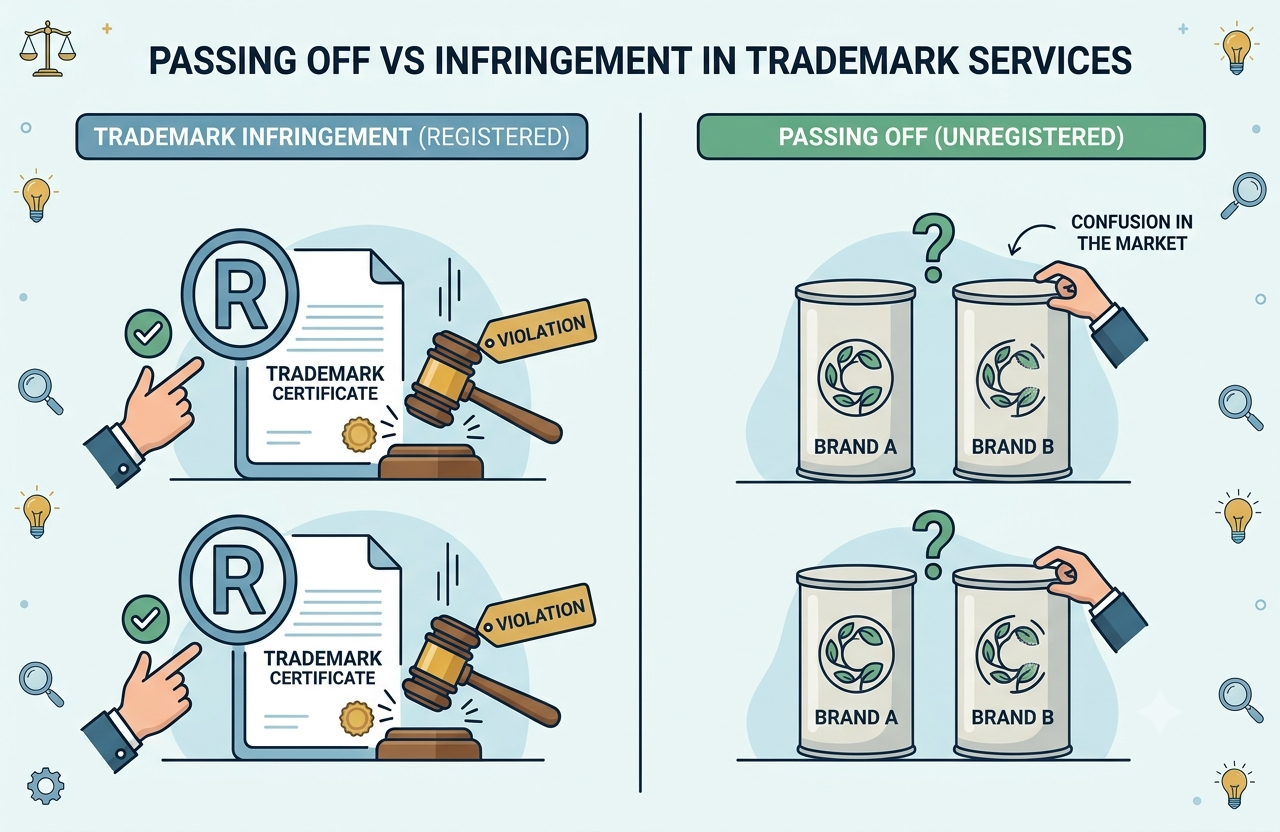
While a design patent protects a product's ornamental shape for 15 years, a trademark (specifically trade dress) protects a product's packaging or design only if it serves to identify the source of the brand to consumers. Trade dress can theoretically last forever as long as it is in commercial use, but it is generally much harder to establish than a design patent.
Plant Patents
Plant patents are highly specialized and protect agricultural and horticultural innovations.
What qualifies
To qualify for a plant patent, you must have invented or discovered and asexually reproduced a distinct and new variety of plant. Asexual reproduction (e.g., cutting, grafting, or tissue culture) is required because it proves the plant can be exactly duplicated and isn't just a genetic fluke. Tuber-propagated plants (like potatoes) and plants found in an uncultivated state are generally excluded.
Examples
- A new variety of thornless rose.
- A crispier, more disease-resistant variety of apple.
Duration and limitations
Plant patents last for 20 years from the filing date. The primary limitation is that it only prevents others from asexually reproducing the plant, or selling/using the plant so reproduced.
Plant patents vs plant variety protection
While plant patents cover asexually reproducing plants, sexually reproducing plants (grown from seeds) and tuber-propagated plants can be protected by a different mechanism: Plant Variety Protection (PVP) certificates, which are administered by the Department of Agriculture, not the USPTO.
Types of Patent Applications
Deciding what type of patent you need is only half the battle; you also need to know the vehicle to get you there. These are the different types of patent applications.
Provisional patent application
A provisional application is a quick, inexpensive way to establish an early filing date without all the formalities of a full utility application. It does not get examined by the USPTO and never matures into a patent on its own. It allows you to use the "patent pending" label and gives you a strict 12-month window to file a complete application.
Non-provisional (complete) application
This is the formal, complete application that gets queued up for examination. It requires precise formatting, detailed claims, and an oath or declaration by the inventor. If it passes the examiner's scrutiny, this is what ultimately becomes your granted patent.
PCT / international application
Patents are territorial, a U.S. patent doesn't protect you in Europe. A Patent Cooperation Treaty (PCT) application acts as a placeholder on an international scale. It doesn't grant an "international patent" (which doesn't exist), but it secures your filing date across more than 150 countries and gives you up to 30 months to decide which specific countries you want to officially file in.
Continuation, continuation-in-part, and divisional applications
- Follow-On Filings While Pending: If your original non-provisional application is pending, you can file "child" applications:
- Continuation: Pursuing a different scope of claims based on the exact same original disclosure.
- Continuation-in-part (CIP): Adding new subject matter or improvements to the original application.
- Divisional: If the examiner decides your application contains more than one distinct invention, they will force you to split the "extra" inventions into divisional applications.
Patent of addition
While not a standalone concept in the U.S., a patent of addition is highly relevant in specific jurisdictions like India and Australia. It allows an inventor to protect minor improvements or modifications to an invention they have already patented. The massive benefit is that it does not require separate annual renewal fees; it simply expires alongside the main parent patent.
What Cannot Be Patented?
Not every brilliant idea or discovery is patentable. To prevent corporations from monopolizing the fundamental building blocks of human knowledge, courts and patent offices universally exclude specific categories of information.
However, how those exclusions are applied varies dramatically by country.
1. Abstract Ideas & Math
- US (USPTO): Excluded under the Alice v. CLS Bank framework.
- Europe (EPO): Excluded “as such” (Article 52).
- India (IPO): Excluded outright (Section 3).
2. Laws of Nature
- US (USPTO): Excluded. Discovering gravity or E=mc² is not an invention.
- Europe (EPO): Excluded.
- India (IPO): Excluded.
3. Computer Programs
- US (USPTO): Patentable only if they offer a concrete technical improvement beyond an abstract idea.
- Europe (EPO): Excluded “as such,” but patentable if they produce a “technical effect.”
- India (IPO): Excluded “per se” (Section 3(k)). Must be paired with novel hardware.
4. Business Methods
- US (USPTO): Extremely difficult. Patentable only with deep, inventive technical integration.
- Europe (EPO): Excluded “as such.”
- India (IPO): Excluded entirely (Section 3(k)).
5. Plants and Animals
- US (USPTO): Plants are patentable (Plant Patents).
- Europe (EPO): Plant and animal varieties are excluded.
- India (IPO): Excluded entirely (Section 3(j)).
Which Type of Patent Do You Need?
Choosing the right type of intellectual property protection depends entirely on what gives your product its competitive market advantage.
For a new product or gadget
If your gadget features a new internal mechanism, a novel structural geometry, or performs a function in a way that has never been done before, you need a utility patent. If competitors can reverse-engineer your product and steal your market share by copying its internal mechanics, utility protection is your only shield.
For a product's appearance or packaging
If the way your product works is already common knowledge (e.g., a standard coffee mug), but you have given it a highly unique, visually appealing shape that competitors might try to mimic, file for a design patent.
Software is inherently difficult to patent. You cannot patent the underlying code itself (that is handled by copyright). Instead, you would file a utility patent to protect the underlying technical processes, novel algorithms, or data processing methods. Additionally, you can file a design patent to protect the specific ornamental layout of your graphical user interface (GUI) or custom icons.
For an early-stage idea (provisional first)
If you have an invention that works conceptually but isn't fully refined, and you need to pitch it to investors or test it publicly at a trade show, file a provisional patent application first. This locks in your filing date and buys you 12 months to perfect the prototype before paying for the expensive non-provisional application.
Patent vs Copyright vs Trademark
A robust IP strategy rarely relies on just one type of protection. Understanding how a patent fits into the broader intellectual property ecosystem prevents costly filing mistakes
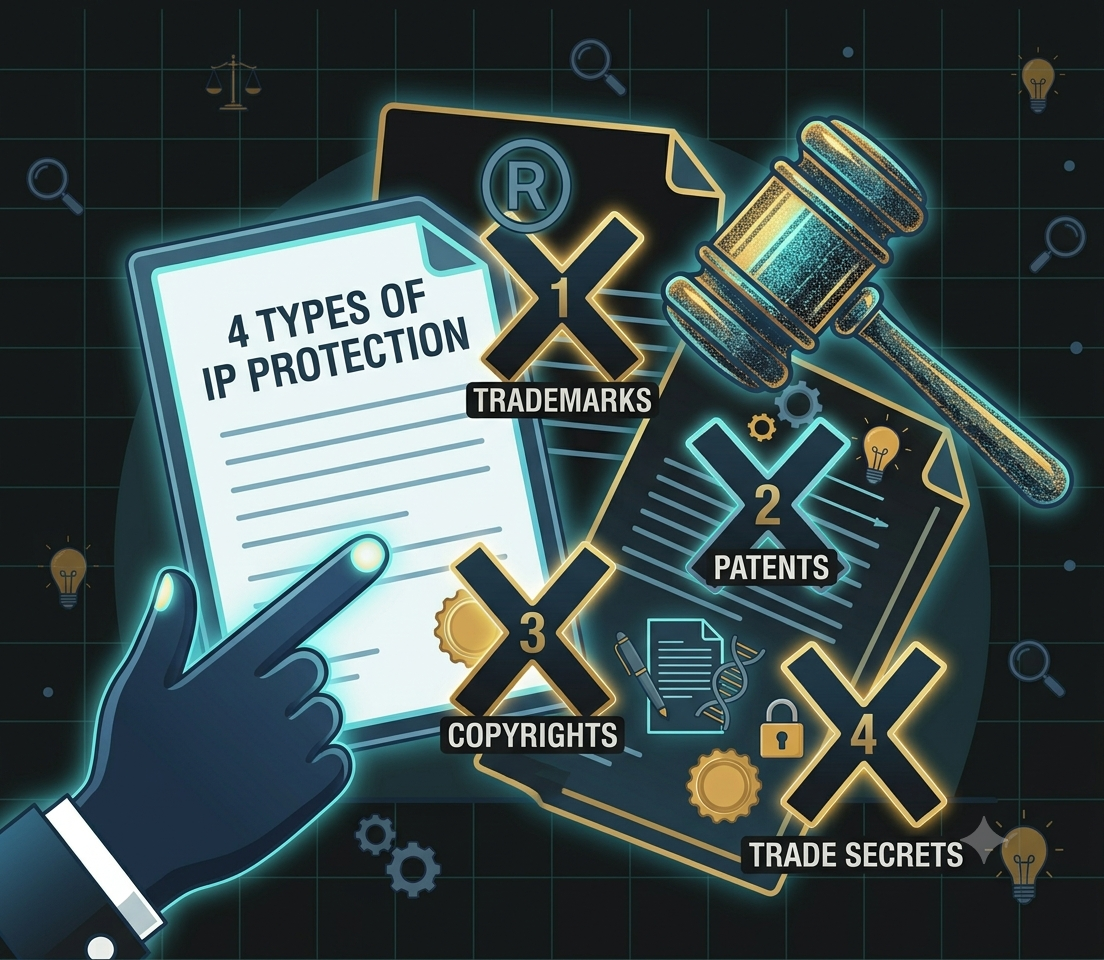
There are three main types of intellectual property. A patent protects inventions, functional mechanics, and ornamental designs, such as a new dual-clutch transmission engine or the shape of a new smartphone. A trademark protects brand names, logos, slogans, and other source identifiers that prevent consumer confusion, such as the name “Ford,” the Nike swoosh, or the Tiffany Blue box color. A copyright protects original works of authorship fixed in a tangible medium, such as the actual lines of software code, user manuals, website copy, and marketing photos.