对于在阿联酋提交专利申请的发明人及企业而言,首次审查即遭驳回的情况,远比您想象的更为常见。
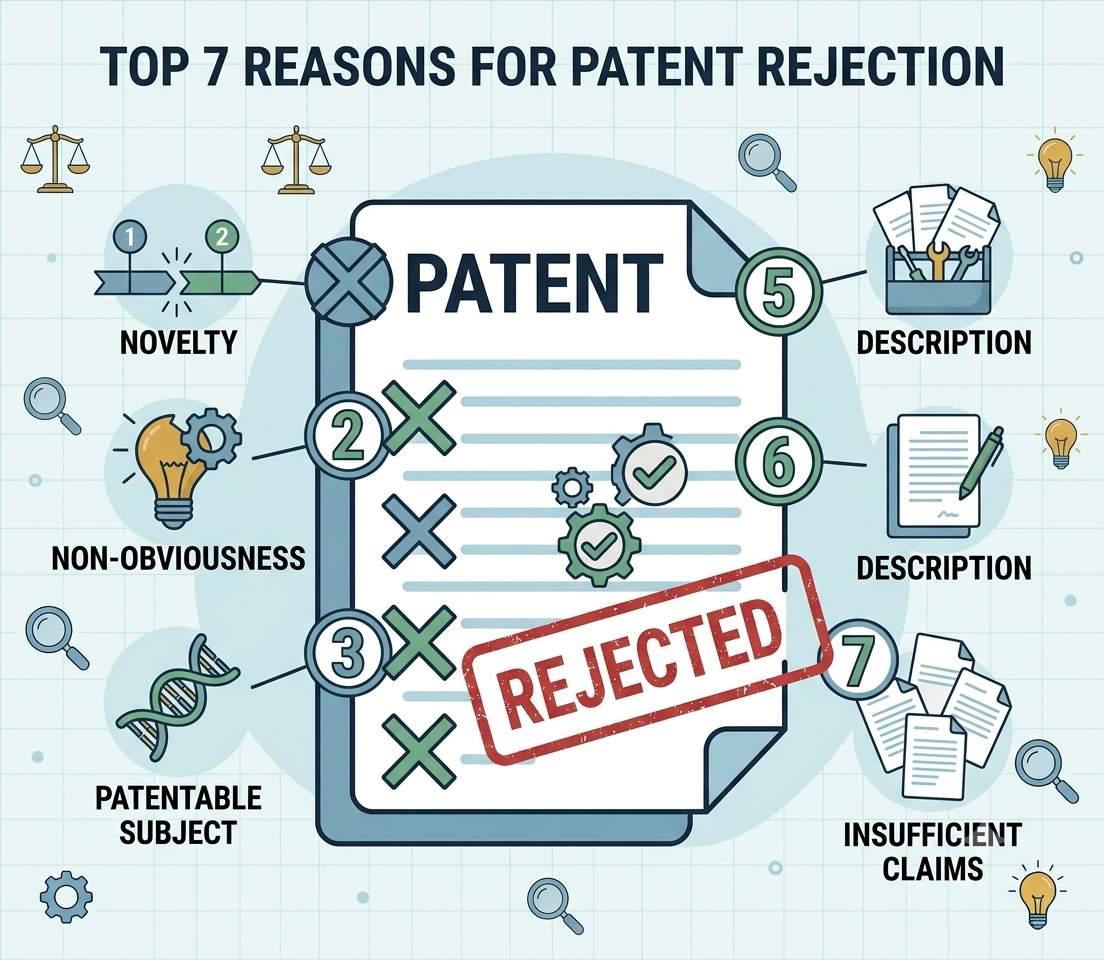
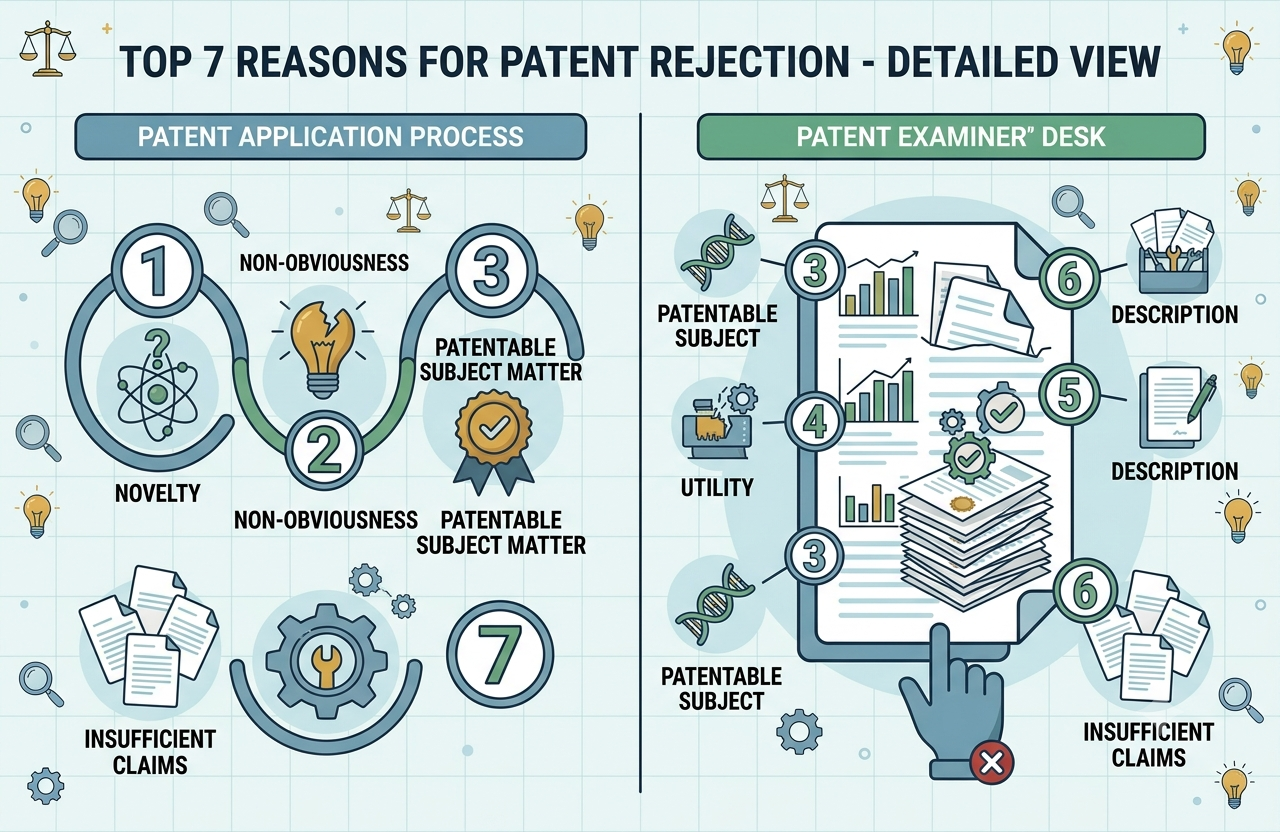
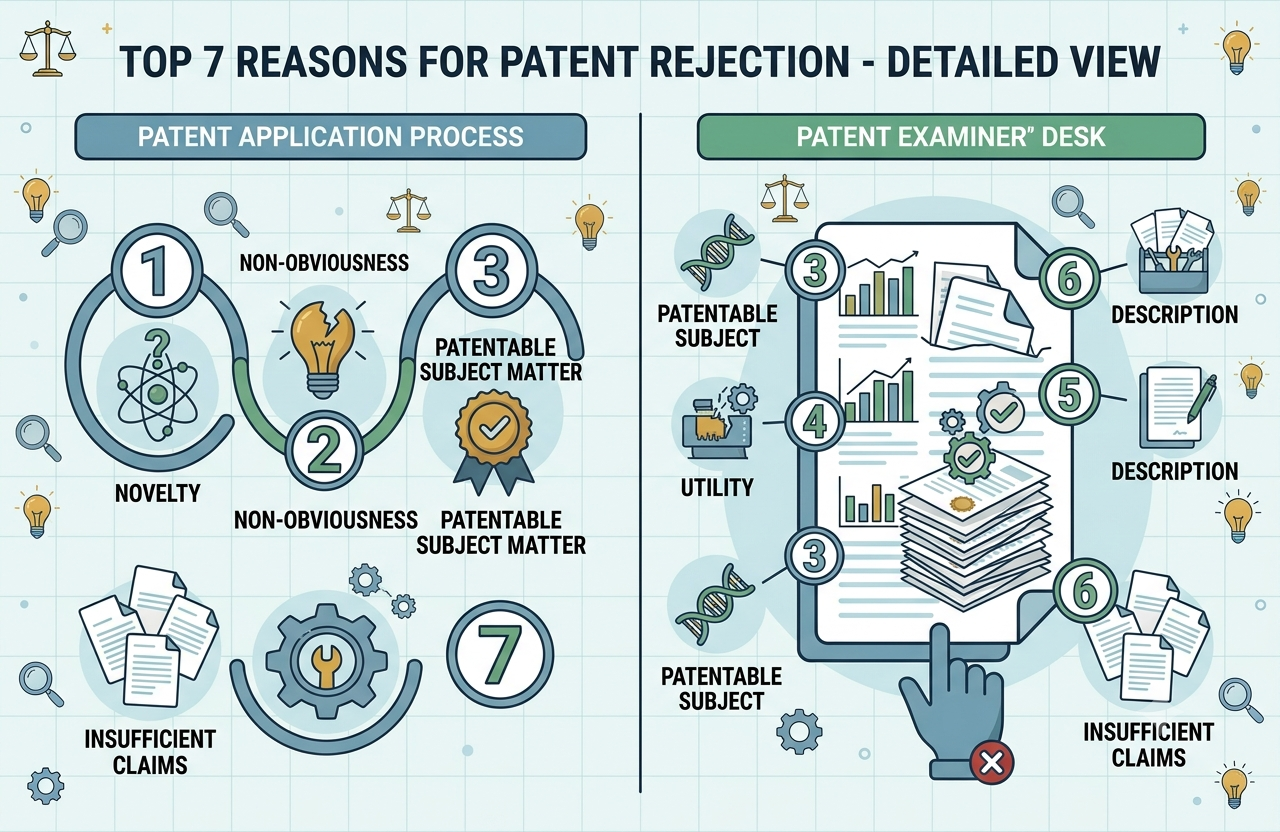
大多数专利申请遭驳回的原因,包括缺乏新颖性、缺乏创造性(非显而易见性)、工业实用性存疑、披露不充分、属于排除性客体、权利要求范围过宽、程序性瑕疵等等。
在提交申请前了解审查员会重点核查哪些内容,可以为您省去数月的往返沟通。
以下是专利申请被驳回的七大最常见原因、您在遇到驳回时可选择的应对方式,以及处理首次专利驳回的具体步骤。
对于在阿联酋提交专利申请的发明人及企业而言,首次审查即遭驳回的情况,远比您想象的更为常见。
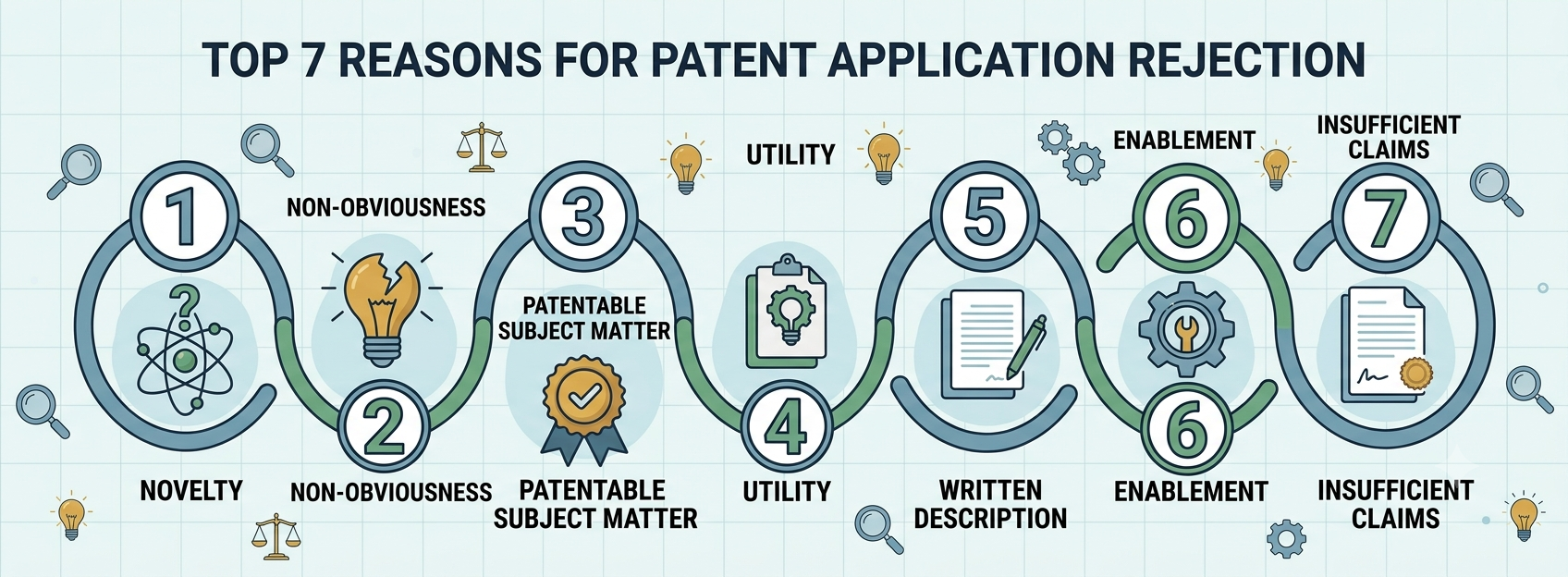
大多数专利申请遭驳回的原因,包括缺乏新颖性、缺乏创造性(非显而易见性)、工业实用性存疑、披露不充分、属于排除性客体、权利要求范围过宽、程序性瑕疵等等。
在提交申请前了解审查员会重点核查哪些内容,可以为您省去数月的往返沟通。
以下是专利申请被驳回的七大最常见原因、您在遇到驳回时可选择的应对方式,以及处理首次专利驳回的具体步骤。
"
初次驳回,通常被称为“审查意见通知书”,是专利申请流程中的正常环节,而非流程的终点。大多数专利申请都会遭遇驳回,原因如下:
在提交专利申请之前,您的发明必须真正具备新颖性——也就是说,在您的申请日之前,该发明不能已在世界任何地方、以任何语言被公开披露过。专利审查员会检索国际专利数据库等各类资料,寻找与您发明相关的证据。只要发现一份文件完整描述了您的发明,该申请便会被自动驳回。在新颖性审查这一关未能通过之前,其他一切都无关紧要。
新颖性在逻辑上并不等同于非显而易见性。您的发明还必须是该领域普通专家不容易想到的方案。若审查员认为,本领域技术人员仅需简单组合一两项现有技术即可得出您的方案,那么即便没有任何单一文件完全公开您的发明,该申请仍会因缺乏创造性而被驳回。
可获得专利的发明,必须是能够在工业中被制造或使用的事物,例如制造业、农业、医疗保健、数字产业或服务业等领域。理论构想、抽象概念等,若不具备具体的操作方式或功能性用途,便无法通过这一审查标准。
您的申请必须将发明阐述得足够清晰,使本领域技术人员无需猜测即可实施该发明。表述不清、步骤缺失、图纸质量欠佳,或说明书内容与权利要求不一致,均是此环节常见的驳回原因。审查员无法为其无法核实功能性的事物提供保护。
并非所有事物都可获得专利保护。可专利性的范围并不延伸至自然发现、科学理论及数学方法,也不包括植物或动物品种。在阿联酋及许多其他司法辖区,独立软件、商业方法及纯算法同样被排除在专利保护之外,此类内容通常改由著作权法予以保护。若您的发明完全局限于上述某一类别,申请几乎必然会被驳回。
由于权利要求界定了您专有权利的法律边界,审查员会对其进行仔细审查。范围过宽的措辞、含糊不清的表述,以及缺乏技术描述支撑的权利要求,都常被驳回。这本是最容易避免的一类驳回,然而由于发明人常常在没有法律协助的情况下自行撰写权利要求,这种情况仍屡见不鲜。
很多时候,申请被拒绝的原因与发明本身毫无关系。缺少授权文件、阿拉伯语或英语翻译不完整、费用未缴纳,或缺少转让契据,都可能延误甚至断送一项申请。这些问题通常是可以补正的,但前提是必须在专利局设定的严格期限内完成。
大多数专利申请之所以被驳回,原因往往在于本可避免的疏漏,而非发明构想本身欠佳——这正是我们团队能够协助您解决的问题。您的专利之路,不必因一次驳回而终结。Abou Naja 知识产权律所与阿联酋各地的发明人及企业携手合作,负责答复审查意见、完善薄弱的申请,并按时限要求提交申诉。
可在60天内,向经济部工业产权申诉委员会正式提出针对驳回决定的申诉。
可以。在可提交答复意见的期限内,您可以申请复审,或提交一份全新的申请。但若驳回的明确理由是缺乏新颖性,在不修改发明内容或不限缩权利要求的情况下重新提交,很可能会得到同样的结果。
在阿联酋,针对最终实质性驳回决定,必须在60天内向工业产权申诉委员会提起上诉,此后还可进一步向联邦法院上诉。而在美国,审查意见通知书是美国专利商标局(USPTO)用于告知驳回决定的信函,申请人可通过论辩、修改权利要求、提交延续审查请求(RCE),或向专利审判与上诉委员会(PTAB)上诉等方式作出回应。尽管具体程序有所不同,但新颖性、创造性及清晰度这些核心要求始终不变。
异议通常指的是可通过修改措辞加以解决的文书性问题。驳回的分量则更重,意味着审查员基于实质审查认为,该发明或权利要求在新颖性、实用性等法律要求方面未能满足。
可以,但务必尽快行动。根据阿联酋专利法,若公开披露系由发明人本人作出或源自发明人,可享有12个月的宽限期。只要在该披露之日起12个月内提交申请,便不会损害您在阿联酋的新颖性。不过,在任何公开披露之前提交申请,始终是最稳妥的做法,因为许多国外司法辖区并不提供同样的宽限期。
根据经济部最新收费标准,个人、中小企业及学术机构提出正式上诉需缴纳500迪拉姆,普通公司则需缴纳1,000迪拉姆。中小企业及学术机构申请全面复审需缴纳2,500迪拉姆,普通公司则为5,000迪拉姆。上述费用不包括专利律师的外部服务费用。
在我们的合集中发现更多见解与故事