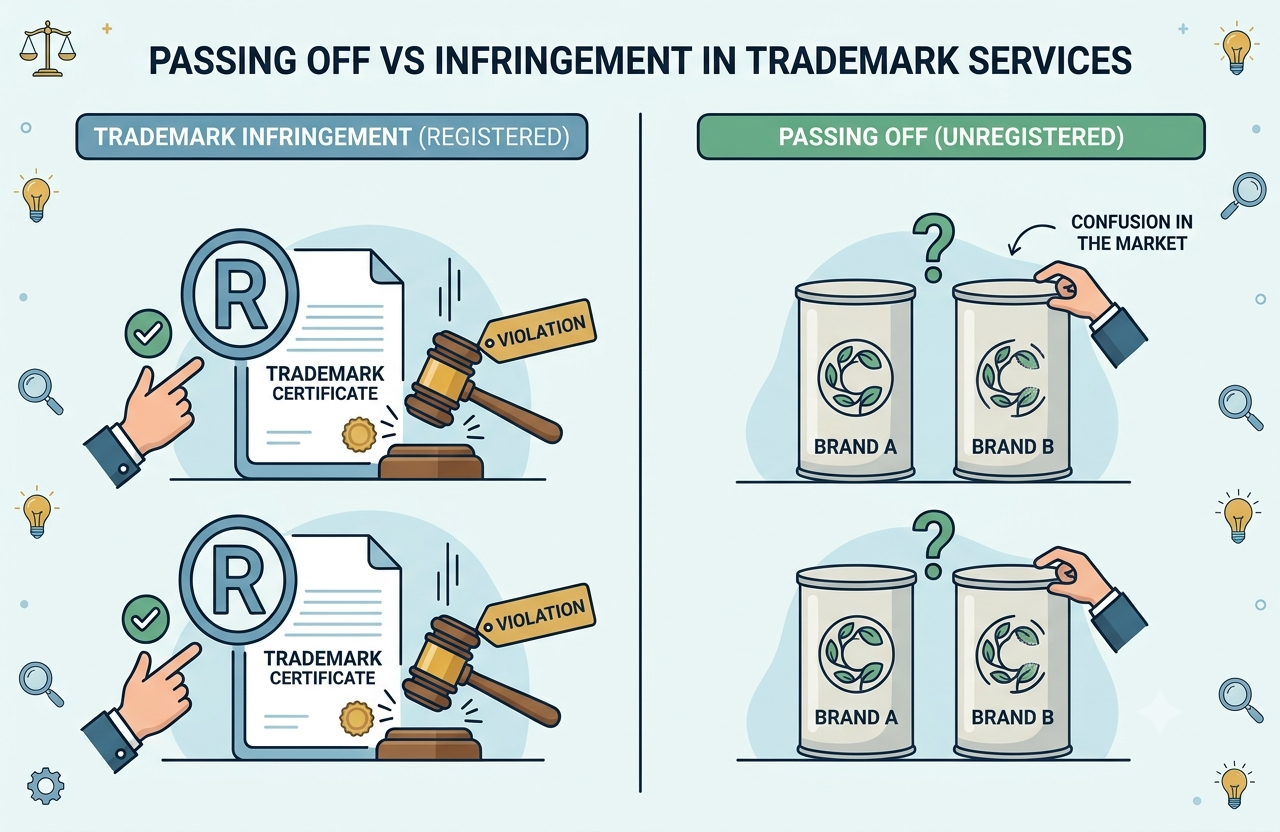
Protecting a brand across domestic and international markets relies on navigating sophisticated digital portals, updated fee schedules, and rigorous statutory mandates. Mastering these legislative pillars ensures complete operational security and defensible commercial rights under UAE trademark law.
Legal Framework at a Glance
- Primary Statute: Federal Decree-Law No. 36 of 2021.
- Executive & Operational Rules: Cabinet Resolution No. 57 of 2022.
- Fees & Fast-Tracking: Cabinet Resolution No. 102 of 2025 (covering fee restructuring and 1-day expedited examination).
- Procedural Flexibility: Administrative Decision No. (2) of 2026 (governing POA grace periods).
- Classification & International Treaties: The 13th Edition of the Nice Classification, the Madrid Protocol (Federal Law No. 67 of 2021), and the GCC Unified Trademarks Law.
- Supporting Legislation: Statutes covering copyright, commercial fraud, and trade transactions.
National Legislation
Federal Decree-Law No. 36 of 2021 (Primary Trademark Law)
The foundational modern statute governing the registration, protection, commercial exploitation, and
enforcement of trademarks across the Emirates.
- What problems it solved vs. the old law: It resolved legacy gaps by expanding statutory protection to non-traditional marks such as sound, smell, and holographic signs streamlining opposition procedures, and increasing penalties for commercial counterfeiting compared to the superseded 1992 legislation.
- Pros: Comprehensive protection scope, clearer provisions on bad-faith filings, stiffer financial penalties for infringers, and electronic filing integrations.
- Cons: Stricter documentary requirements for foreign applicants and higher statutory damages thresholds that require extensive evidentiary proof during litigation.
- Live example: A multinational beverage corporation successfully utilizes this decree to prosecute local entities attempting to register identical phonetic variants of its signature logo.
Cabinet Resolution No. 57 of 2022 (Executive Regulations)
- The operational roadmap issued by the Cabinet detailing the procedural mechanics, documentation protocols, and administrative workflows required to execute the primary trademark statute.
- Pros: Clarifies exact classification procedures, timelines for filing oppositions, and administrative rules for handling multi-class applications.
- Cons: Rigid procedural timelines can lead to automatic application abandonments if minor bureaucratic objections are missed.
- Live example: A tech startup utilizing the resolution to successfully navigate a multi-class international trademark registration through the Ministry of Economy portal.
Cabinet Resolution No. 102 of 2025 & Fee Revisions
- The modern financial and administrative restructuring framework introduced by the UAE Cabinet to streamline official costs and service delivery standards.
- Pros: Introduces structured fee adjustments and tailored considerations, including a 50 percent fee reduction for small and medium-sized enterprises (SMEs) registered under the National Programme and exemptions for people of determination.
- Cons: Imposes structured charges on specialized appeal processes and administrative reviews that were previously bundled.
- Live example: A growing regional e-commerce firm leveraging the updated fee schedule to scale its brand protection portfolio cost-effectively across multiple classes.
Administrative Decision No. (2) of 2026 & UAE PASS Integration
- Procedural updates issued by the Ministry of Economy governing filing flexibility, specifically regarding grace periods for submitting post-filing documentation like Powers of Attorney (POAs) alongside mandatory digital identity authentication via UAE PASS for portal access.
- Pros: Eliminates immediate application rejections by granting monthly extensions for late POA
- submissions and enhances cyber-security through unified digital verification.
- Cons: Strict adherence to monthly extension requests is mandatory to avoid ultimate forfeiture.
- Live example: An international applicant utilizing the POA grace period window to complete consular
- legalization without losing their initial filing priority date.
The 1-Day Expedited Examination Service
- A rapid-track administrative mechanism introduced under Cabinet Resolution No. 102 of 2025 to fast track straightforward applications.
- Pros: Dramatically reduces the preliminary examination timeline down to 24 hours for qualifying clean
- filings.
- Cons: Strict eligibility criteria mean that any minor specification ambiguity instantly disqualifies the application from the fast track.
- Live example: A fast-moving consumer goods brand utilizing the expedited track to secure urgent clearance ahead of a coordinated product launch.
Nice Classification (13th Edition) Integration
- The mandatory adoption of the latest international classification standard governing goods and services categorization.
- Pros: Modernizes asset protection by aligning domestic filings with global standards, particularly for digital assets, virtual goods, and e-commerce services.
- Cons: Requires meticulous auditing of older descriptions to prevent classification mismatches during renewal or expansion.
- Live example: A fintech enterprise structuring its software and virtual currency offerings precisely under the updated 13th Edition guidelines.
Cabinet Resolution No. 18 of 1993 & related legacy fee resolutions
Serving as historical milestones, these legacy fee structures laid the baseline for official government cost schedules associated with filings, renewals, and publication notices before being modernized by newer administrative fee decrees.
Federal Law No. 37 of 1992 (Repealed — historical context only)
The initial federal framework that governed intellectual property for nearly three decades, now entirely
superseded by the 2021 legislative overhaul but frequently referenced in legacy jurisprudence and grandfathered
dispute analysis.
International Agreements & Digital Infrastructure
Federal Law No. 67 of 2021 (Madrid Protocol Accession)
- The legislative instrument through which the UAE officially joined the Madrid System, allowing brand owners to protect trademarks in multiple member countries via a single international application.
- Pros: Drastically reduces administrative friction, filing costs, and localization hurdles for cross-border brand portfolios expanding into the Middle East.
- Cons: Any central attack on the foundational home-country application within the first five years compromises the entire international registration portfolio.
- Live example: A European fashion label securing multi-jurisdictional protection spanning the UAE and neighboring GCC markets through a unified World Intellectual Property Organization (WIPO) submission.
GCC Unified Trademarks Law
A regional legislative framework designed to harmonize registration standards, classification nuances, and enforcement mechanisms across Gulf Cooperation Council member states, heavily integrated into modern domestic legal interpretations.
The UAE TM Marketplace
- The Ministry of Economy’s official digital platform framework designed for listing, licensing, and trading registered intellectual property assets.
- Pros: Creates a centralized, transparent digital ecosystem for commercializing brand assets and executing IP transactions.
- Cons: Requires strict adherence to platform verification standards and digital compliance protocols.
- Live example: A regional enterprise leveraging the marketplace to securely license its trademark portfolio to franchise partners across the Emirates.
Other Supporting Laws
- Federal Decree-Law No. 38 of 2021 (Copyright Law) - Governs literary, artistic, and software works, providing parallel intellectual property layers that frequently intersect with brand packaging, commercial logos, and digital asset styling.
- Federal Law No. 19 of 2016 (Combating Commercial Fraud) - Empowers municipal and federal authorities to instantly seize counterfeit goods, penalize fraudulent labeling, and shut down commercial entities distributing pirated merchandise.
- Federal Decree-Law No. 50 of 2022 (Commercial Transactions) - Regulates general commercial operations, business assets, and corporate liabilities, ensuring that brand ownership rights align seamlessly with broader commercial law mandates.
Recent Court Rulings Shaping the Law
Abu Dhabi Court of Cassation Case No. 74/2025
A landmark decision addressing e-commerce infringement where the court heavily penalized an unauthorized local storefront and physical vendor for exploiting a globally renowned fashion brand's digital presence, affirming that
UAE trademark law extends robust protective remedies across online and physical retail divides.
May 2025 Federal Supreme Court judgment on prior use
A pivotal ruling clarifying that true ownership principles are heavily anchored in substantive commercial prior use rather than mere administrative registration, establishing that earlier commercial users maintain statutory windows to challenge and cancel bad-faith registrations.
Common Mistakes Businesses Make Under UAE Trademark Law
- Failing to conduct comprehensive preliminary availability searches prior to launching local marketing campaigns.
- Relying purely on trade license registration under the assumption it automatically secures brand identity rights.
- Ignoring strict opposition windows, leading to missed opportunities to contest infringing competitor applications.
- Neglecting to update official Ministry of Economy records following corporate mergers, address changes, or structural shifts.
FAQs
What is the main law governing trademarks in the UAE?
Federal Decree-Law No. 36 of 2021 serves as the core foundational statute governing all registration, operational, and enforcement matters under UAE trademark law.
Is the UAE part of the Madrid Protocol?
Yes, the country officially acceded to the international system via Federal Law No. 67 of 2021, enabling streamlined cross-border portfolio management.
What's the difference between UAE trademark law and copyright law?
Trademark registration protects distinct commercial identifiers, logos, and service names used to distinguish market offerings, whereas copyright legislation secures original creative expressions, literary works, and artistic content.
Does UAE trademark law protect against counterfeiting?
Yes, provisions within the primary legislation work alongside anti-commercial fraud statutes to impose severe financial penalties, inventory confiscations, and business closures for counterfeiting offenses.
How do I register a trademark in the UAE?
Applications must be submitted electronically through the Ministry of Economy portal using UAE PASS
authentication, followed by formal examination under the 13th Edition Nice Classification, official gazette
publication, and certificate issuance if no valid oppositions arise.
Can a foreigner register a trademark in the UAE without a local agent?
Foreign applicants without a physical domicile or establishment in the country are typically required to process their filings through accredited local legal representatives or registered intellectual property agents.
What can I do if someone infringes my registered UAE trademark?
Rightsholders can issue formal legal cease-and-desist notices, file administrative complaints with the Ministry of Economy, or initiate civil and criminal litigation through local courts to claim statutory damages and secure injunctions.