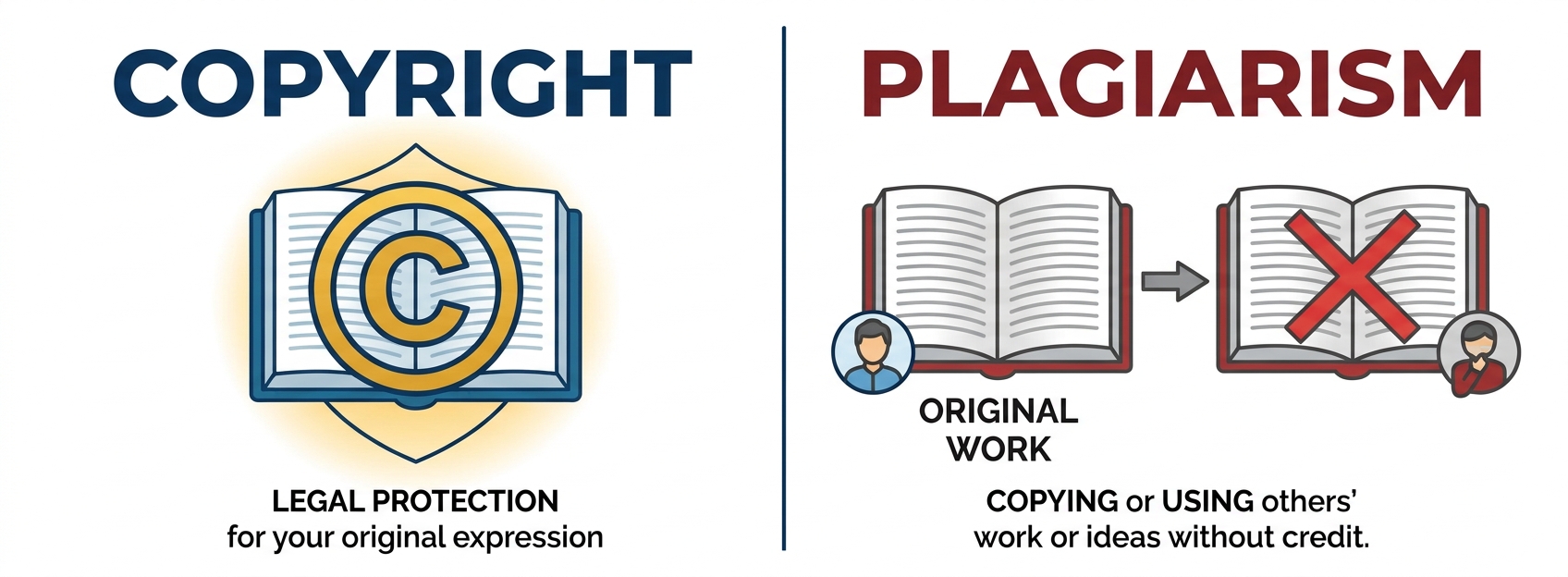
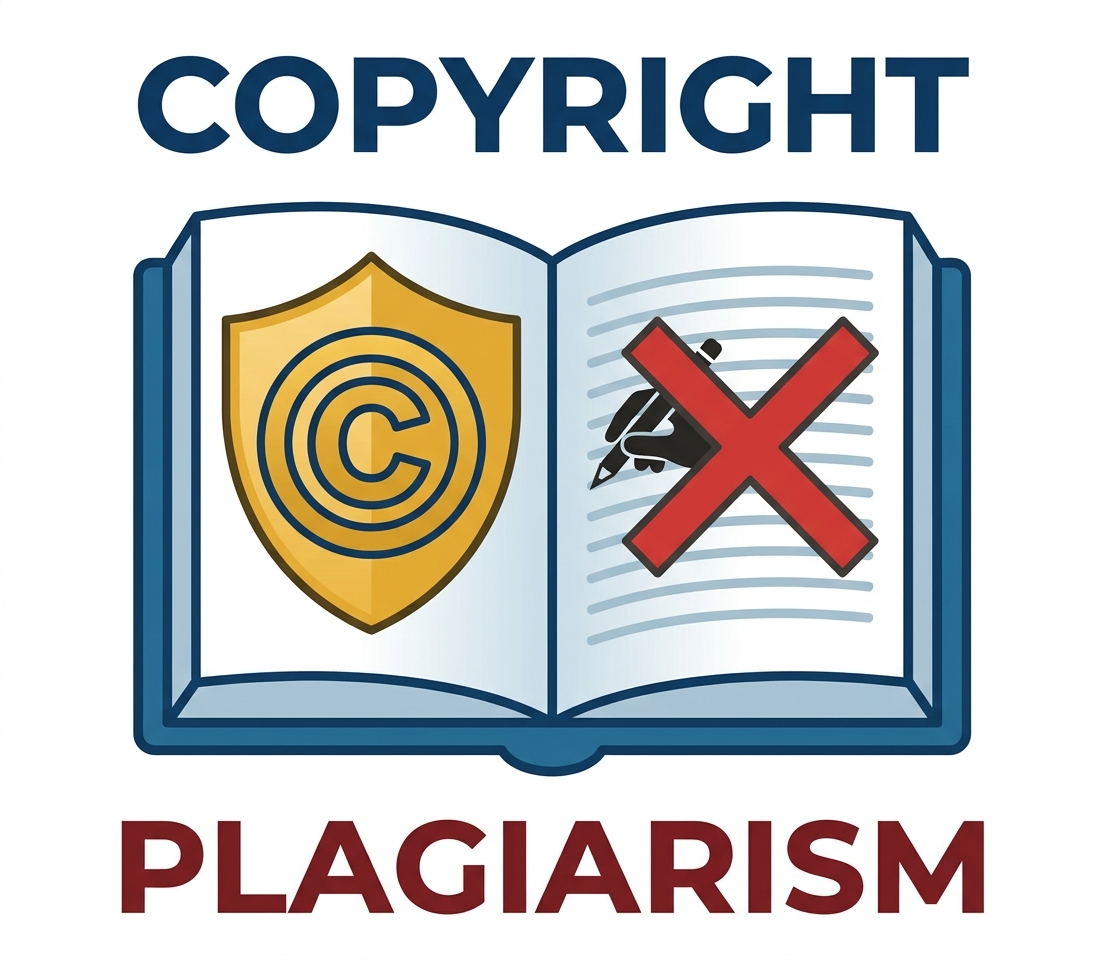
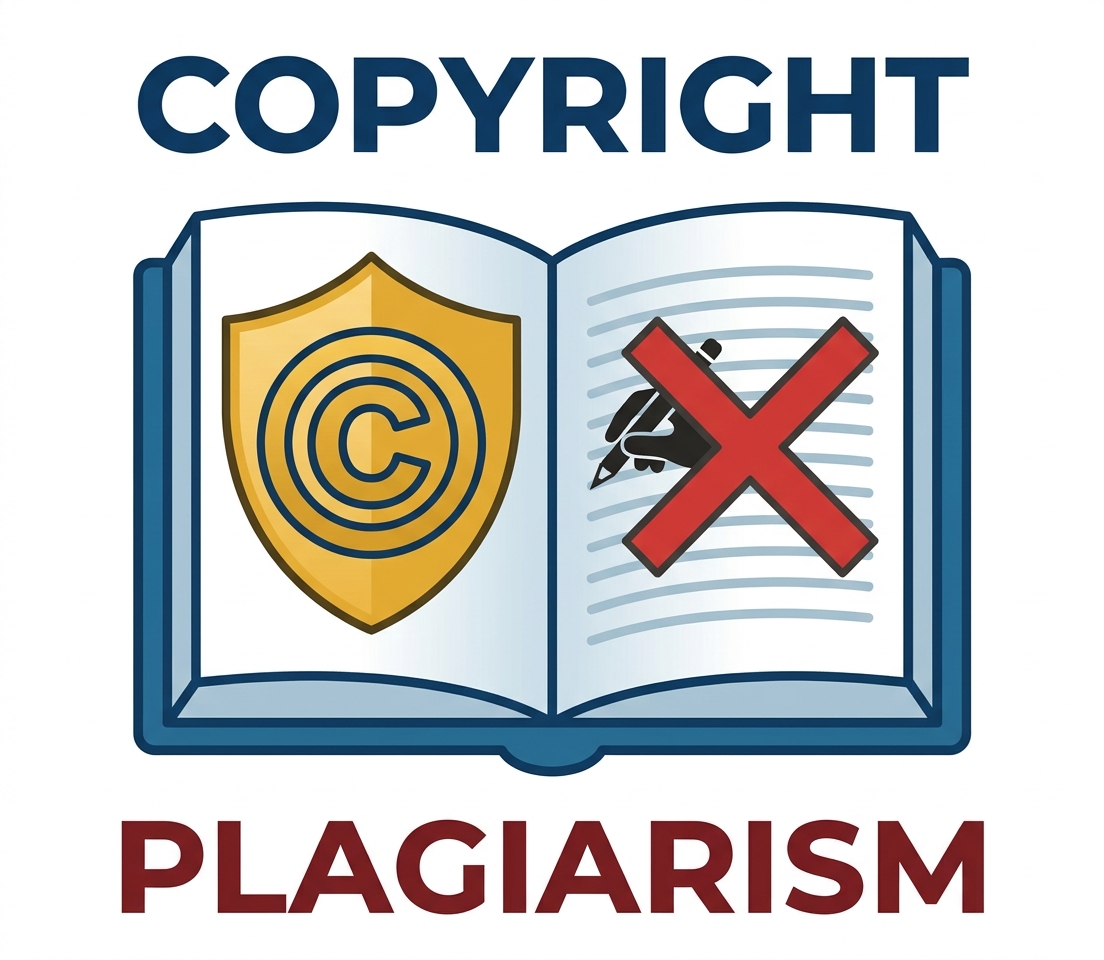
Making the distinction between copyright vs plagiarism is essential for protecting your intellectual assets. Copyright infringement is a strict legal violation punishable by civil courts. Plagiarism is an ethical violation punished by academic or professional institutions. The two actions often occur together, but they follow entirely different rules.
What is Copyright Infringement?
Definition and Legal Basis
Copyright infringement occurs when you copy, distribute, perform, or display a legally protected work without the owner's permission. It is a direct violation of national intellectual property laws. The creator holds exclusive rights to their work the moment it is fixed in a tangible medium.
What is Protected
Copyright protects creative expression like books, music, photographs, and software code. It does not protect underlying facts, broad ideas, or short common phrases.
Consequences
Violating a copyright carries severe legal penalties. The copyright owner can file a civil lawsuit. Consequences include statutory damages, court injunctions, and forced digital takedowns.
What is Plagiarism?
Definition
Plagiarism is the act of presenting another person's work, words, or ideas as your own original creation. It is an issue of false attribution and dishonesty.
Where It is Enforced
Plagiarism is policed by institutions rather than the government. Schools, universities, publishing houses, news organizations, and corporate employers enforce strict anti-plagiarism rules. Judges and courts do not hear cases based purely on plagiarism.
Consequences
The penalties for plagiarism ruin careers and reputations. Students face failing grades or permanent expulsion. Professionals face retracted publications, public disgrace, and immediate job loss. Businesses face severe reputational damage and loss of consumer trust when marketing teams plagiarize competitor content or advertising concepts.
Where They Overlap
People often ask, is plagiarism copyright infringement in all cases? The answer is no, but they frequently happen together. An act becomes both when you steal a legally protected work and try to take credit for it. Copying a paragraph verbatim from a published book without citing the author is plagiarism. Because that book is legally protected, it is also copyright infringement.
Creative Commons licenses allow free use of certain materials. However, licenses requiring attribution demand that you name the original creator. If you use this free material and fail to give credit, you breach the legal contract. This makes the act copyright infringement. By presenting the work as your own, you simultaneously commit plagiarism.
Key Differences Explained
Legal vs. Ethical
Copyright is a legal framework defined by government statutes and international treaties. Plagiarism is an ethical standard defined by community guidelines and institutional honor codes.
Ownership vs. Attribution
Copyright infringement harms the owner's ability to control and profit from their property. Plagiarism harms the audience by lying about who created the material. You can commit copyright infringement even if you correctly attribute the work to the original author.
Protected Expression vs. Ideas
Copyright law only protects the fixed expression of an idea. It never protects the underlying theory or concept itself. Plagiarism explicitly forbids stealing someone else's original idea or methodology without credit. Taking a competitor's research methodology and rewriting it in your own words is plagiarism, but it is entirely legal under copyright law.
Intent vs. Strict Liability
Plagiarism policies often distinguish between deliberate theft and an accidental failure to cite a source. Copyright infringement operates on strict liability. You can infringe a copyright accidentally without knowing the original work existed, and courts will still hold you legally accountable. Intent only influences the size of the monetary damages awarded.
The Ghostwriting Exception
Plagiarism involves taking false credit. However, work for hire contracts create a legal exception. When a business hires a freelance writer to create an article under the name of a corporate executive, the writer signs a contract waiving their right to attribution. The executive legally claims the work. This is neither plagiarism nor copyright infringement because a formal contract transfers the ownership and attribution rights.
The Role of Fair Use
Fair Use provisions allow you to legally use a copyrighted work for critique, parody, or news reporting without permission. However, if you use a work under Fair Use rules but fail to cite the original creator, you still commit plagiarism. Conversely, giving full credit does not protect you from a copyright lawsuit if your use exceeds the legal limits of Fair Use.
Real-World Examples
Reviewing these plagiarism vs copyright infringement examples clarifies how these concepts apply in daily life.
- Example 1: Using a copyrighted photo without permission: You download a photo from a professional photographer and put it on your business website. You clearly label the photo with the photographer's name. This is not plagiarism because you gave credit. It is copyright infringement because you did not pay for a license.
- Example 2: Paraphrasing a Wikipedia article without citation: You rewrite the historical facts from a Wikipedia page for a school essay and claim the research as your own. Wikipedia content is free to use, and facts are not copyrightable. This is plagiarism, but it is not copyright infringement.
- Example 3: Copying a paragraph from a novel into your book: You copy a unique passage from a modern fantasy novel and insert it into your own published story without credit. This violates both rules. You stoleprotected expression (infringement) and lied about writing it (plagiarism).
Modern Challenges and Consequences
- The Impact of Artificial Intelligence: Undisclosed AI generation is considered plagiarism by publishers. However, because machines cannot hold copyrights, using AI output is only copyright infringement if the tool directly copied a protected source.
- Detection and Proof: Software scanners detect plagiarism by comparing text against billions of online sources. However, software cannot prove copyright ownership. Only a formal government registration certificate gives you the legal power to sue for infringement.
- Dual Consequences and Penalties : Understanding copyright vs plagiarism means recognizing both penalties can apply simultaneously. If you publish a stolen article under your own name, the publisher fires you for plagiarism, and the original creator sues you in civil court for copyright infringement.
Frequently Asked Questions
1. Is plagiarism illegal?
Plagiarism itself is not a crime or a civil tort in the legal system. It is a violation of ethical codes. However, if the plagiarized material is a protected creative work, the act crosses the line into copyright infringement, which is illegal.
2. Can you plagiarize something that is not copyrighted?
Yes. William Shakespeare's plays are in the public domain and have no copyright protection. If you publish a play today and claim you wrote it, you are committing plagiarism without breaking any copyright laws.
3. Can you get sued for plagiarism?
You cannot be sued purely for plagiarism. A lawsuit only happens if the plagiarism also constitutes copyright infringement, breach of contract, or fraud.
4. Is self-plagiarism a real thing?
Yes. In academia and publishing, self-plagiarism occurs when you reuse your own previously published work and present it as new material. It deceives readers and violates publisher guidelines. Furthermore, if you signed the rights to your previous work over to a publisher, reusing your own writing is actual copyright infringement.
Key Takeaways
- The debate of copyright vs plagiarism is a matter of law versus ethics.
- Copyright infringement requires unauthorized use of legally protected material.
- Plagiarism requires claiming false credit for someone else's work or ideas.
- You can commit one without committing the other, or you can commit both simultaneously.
- Institutions punish plagiarism, while courts punish copyright infringement.
Defend Your Original Work with Legal Authority
Do not rely on institutional honor codes to protect your corporate content. Secure your portfolio legally with Abou Naja IP. Schedule a consultation to register your work and stop GCC infringement.