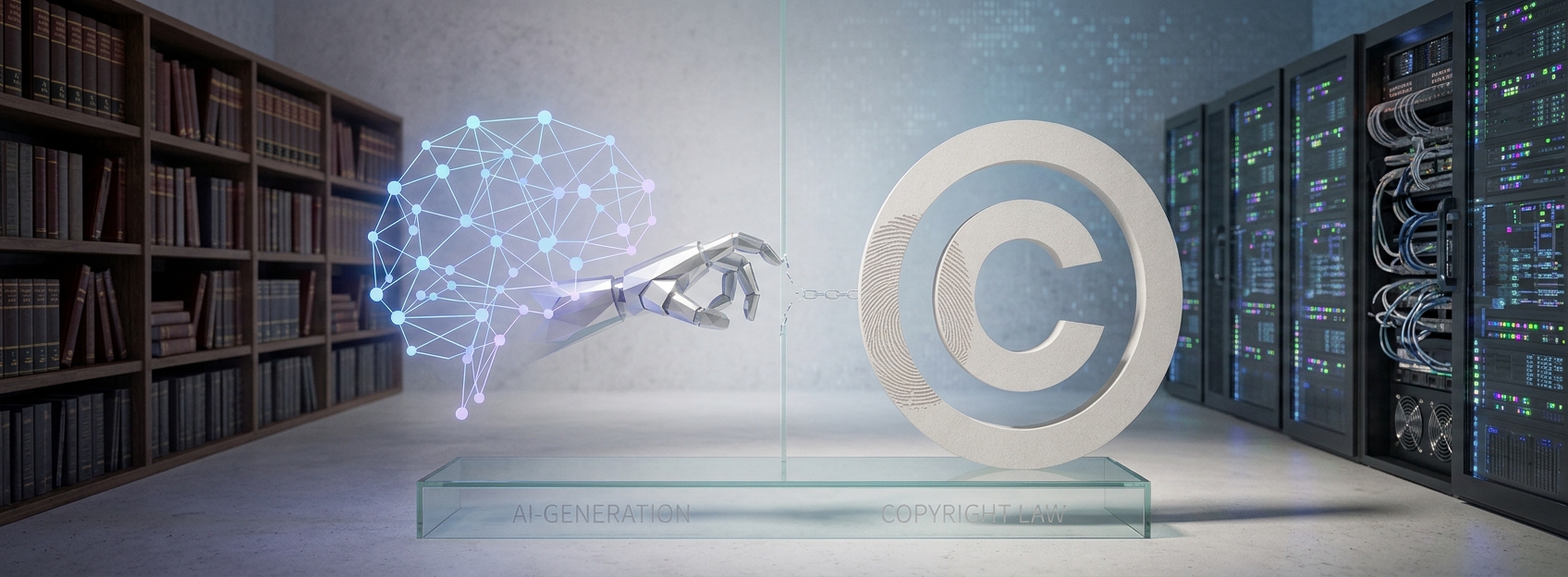
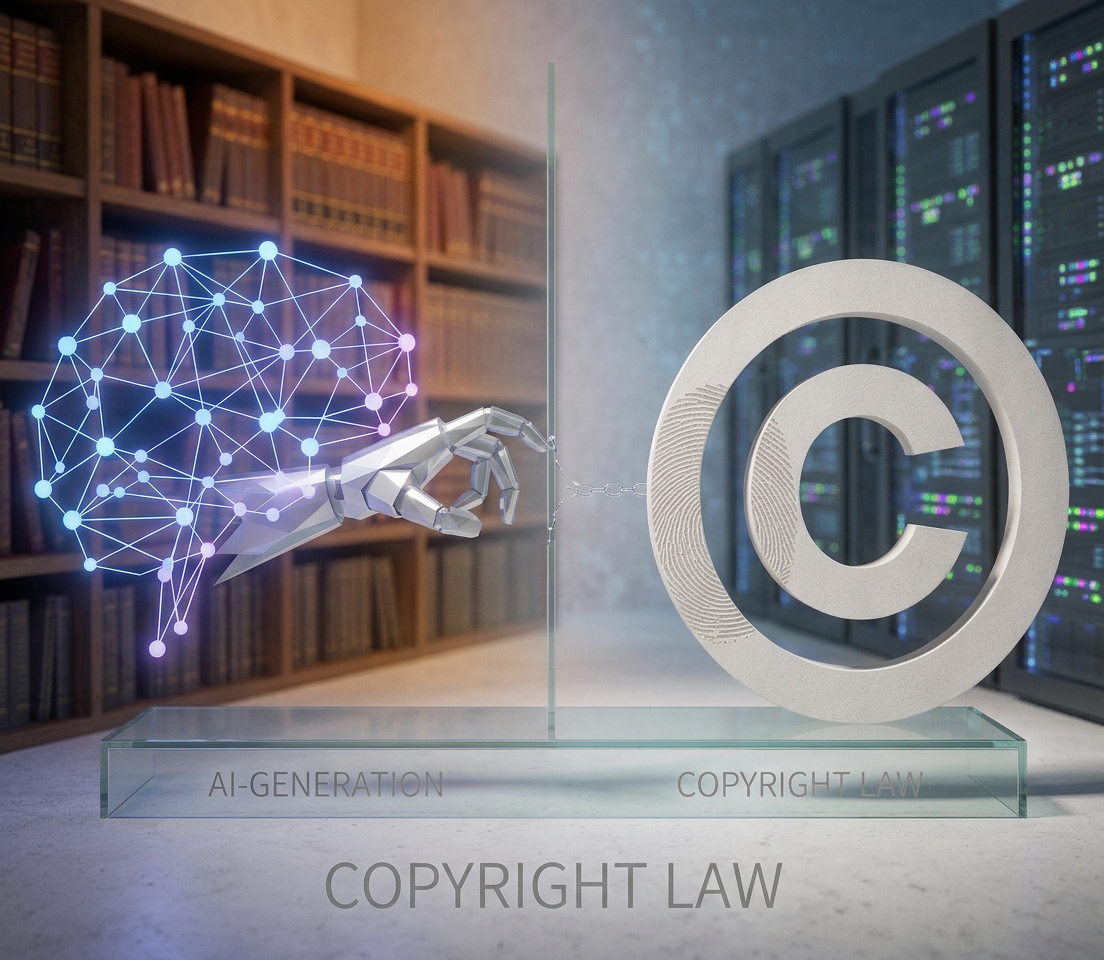
AI and copyright law disputes present a dual challenge: determining output protection and assessing training data compliance. While UAE law addresses output rights clearly, it has yet to settle the rules for model inputs.
Federal Decree-Law No. 38 of 2021 defines an author as "the person who creates the work." UAE law does not recognise an AI system as an author, so content generated without meaningful human input attracts no protection.
That places the UAE close to the United States and away from the United Kingdom, which has protected computer-generated works since 1988 but now proposes to stop, aligning closer to the global human-authorship standard.
Can AI content be copyrighted?
Protection depends on human authorship, and four features of the Decree-Law settle it.
- The definitions confine authorship to a person: Article 1 defines a work as "every innovative production in the field of literature, arts or science" and the author as the person who creates it. Article 2 lists twelve protected categories, from written works and software to artistic works.
- Two requirements operate as gatekeepers: "Person" excludes an AI system from authorship, and "innovative" imports an originality threshold presupposing intellectual choice. A system producing output on instruction meets neither.
- No provision fills the gap: There is no machine authorship, no rule allocating autonomous output to the operator or employer, and no equivalent of section 9(3) of the UK Copyright, Designs and Patents Act.
Article 3 confirms the boundary. Ideas, procedures, concepts, principles and data fall outside protection. The outcome is often misunderstood. Content published straight from a generative tool is not weakly protected. It is unprotected, and nobody can stop a competitor copying it.
When human involvement changes the answer
Purely autonomous output is rare in commercial work, so most disputes turn on a narrower question: whether AI served as an instrument or replaced the author.
The US Copyright Office drew that line on 29 January 2025. Prompts do not establish authorship, it concluded, "even with highly detailed prompts or repeatedly revised prompts," because the user does not control how the system turns an instruction into expression. Authorship comes from what the user does with the output.
Four decisions show where the line has fallen:
- Zarya of the Dawn (February 2023). The Office registered the written text and the arrangement of the images, but refused the images themselves.
- A Single Piece of American Cheese (February 2025). The Office accepted the "selection, arrangement, and coordination" achieved through inpainting, but disclaimed the generated imagery.
- Beijing Internet Court, 27 November 2023. Protected a Stable Diffusion image where the creator used over 150 prompts and set generation parameters.
- Zhangjiagang People's Court, 19 March 2025. Refused protection where the input was limited.
No UAE court has decided the point, but the Decree-Law rests on the same premise, so this reasoning is a reliable guide:
- Autonomous generation published as produced: No protection.
- Substantially modified generated material: The human contribution is protected, the material underneath is not.
- AI used for one step inside a human-authored work: protection is unaffected.
Is it legal to train AI on copyrighted material?
The second half of the AI and copyright question concerns inputs, and it is far less settled. Three things decide the answer.
- The reproduction right covers training: Training copies datasets, an act reserved for authors under Article 7. Article 22’s narrow exceptions (such as personal or educational use) do not cover commercial AI ingestion, and the UAE has no explicit text and data mining exception.
- Training location dictates the claim: Because models are typically trained on foreign servers, there is rarely a local act of reproduction to challenge. Consequently, the legality of training under UAE law remains unsettled, mirroring global divisions between US fair use and the EU's opt-out model.
- Outputs pose the greatest business risk: Publishing material substantially similar to a protected work constitutes infringement under Article 2 (derivative works), regardless of the training method. Liability falls entirely on the publishing business. Penalties are severe: Articles 39 and 42 provide for imprisonment, fines up to AED 100,000 (doubled on repetition), and business closure for up to six months.
Copyright law for AI-human content
Where protectable authorship exists, ownership follows the ordinary rules. Article 28 vests employee work done in the course of duties in the employer and commissioned work in the commissioning party; independent work stays with the employee. Article 27 lets the person directing a collective work exercise its rights. Article 4 makes deposit optional, though a Ministry of Economy filing establishes a dated record of ownership.
- A supplier's AI use becomes the client's exposure. Where an agency delivers largely machine-generated material, the client acquires nothing enforceable, and usually finds out only on trying to enforce it. Engagement terms should require disclosure and assign all subsisting rights.
- A vendor licence is not a copyright. AI providers grant broad contractual rights over outputs, but those bind the provider alone and cannot create a right that never arose.
- The same test applies to code. A codebase generated with minimal human authorship carries no copyright and cannot support an ownership warranty in a transaction. The reverse exposure is licence contamination from models trained on public repositories.
Free zone status changes none of this: DIFC Law No. 4 of 2019 sends IP disputes in the DIFC to the DIFC Courts, a question of forum, not subsistence.
Cases that highlight the current position
- Thaler v. Perlmutter (US). On 18 March 2025, the D.C. Circuit affirmed refusal of registration where the applicant named his AI system as author, holding that the Copyright Act requires a human. The Supreme Court denied review in March 2026.
- Getty Images v. Stability AI (UK). The English High Court gave judgment on 4 November 2025. Getty discontinued its training and output claims mid-trial because the training had taken place abroad, and the court rejected the rest, holding that model weights are "purely the product of the patterns and features" learned in training and hold no copies. Only a narrow trade mark point on iStock watermarks succeeded.
- Bartz v. Anthropic (US). Anthropic settled with authors in September 2025 for USD 1.5 billion over pirated books in training data. The determining factor was the provenance of the material, not training itself.
- The New York Times v. OpenAI and Microsoft (US). Filed on 27 December 2023 and still running, it is the likeliest source of a definitive US ruling on fair use in training.
- UK Government report, 18 March 2026. The government proposed removing section 9(3) CDPA, leaving no major jurisdiction protecting autonomous output, while confirming that AI-assisted works keep protection.
Creators and companies take action to protect copyrighted works
Rights holders have moved ahead of the law. Publishers and image libraries have signed paid licensing deals with developers, and Getty launched its own product trained on licensed material after using Stability AI. Robots.txt directives, crawler blocking and opt-out signals document a refusal of permission, and content credentials record authorship and date.
For a UAE business the effective measures are narrower:
- Keep dated records of the human contribution: drafts, briefs and version histories are the evidence of authorship.
- Require disclosure of AI use, non-infringement warranties and assignment of rights from suppliers.
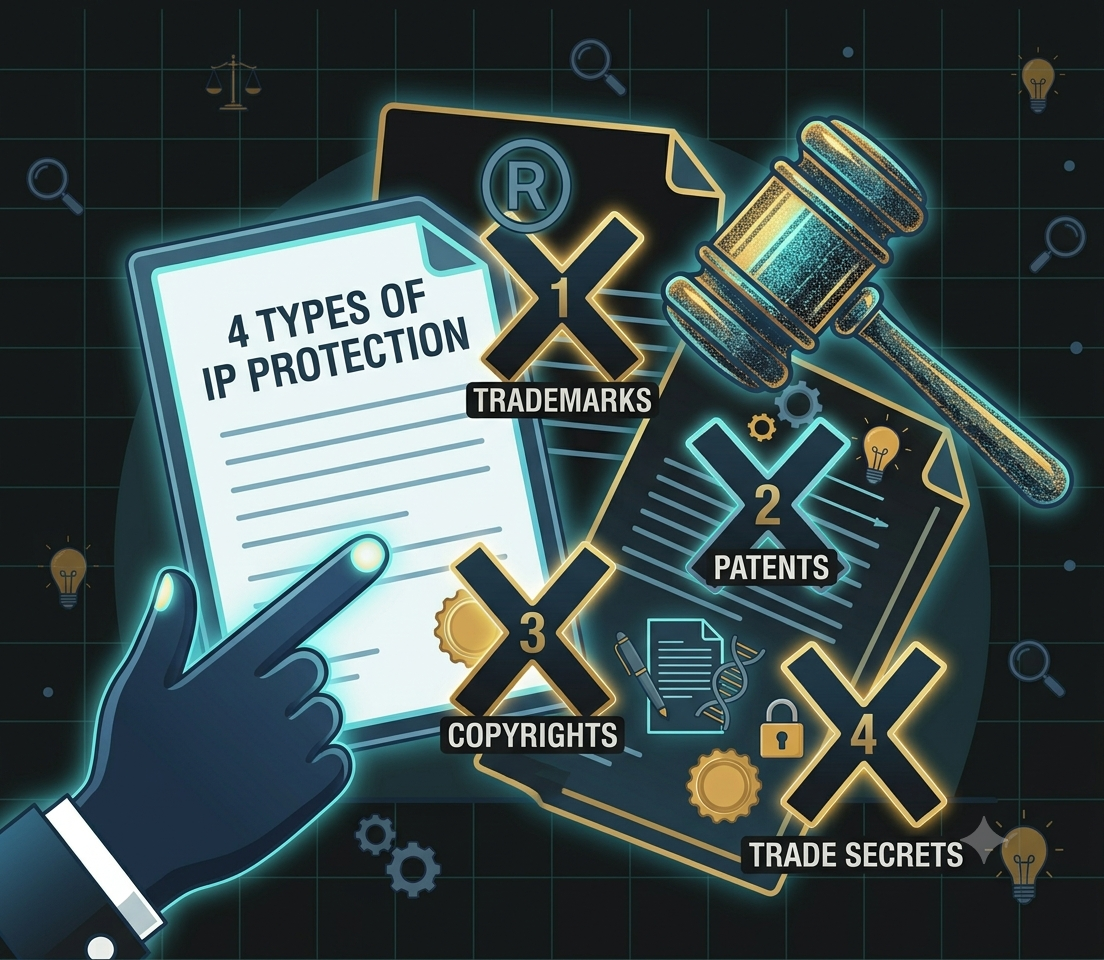
- File core creative material with the Ministry of Economy, and register logos as trade marks, which do not depend on authorship.
- Apply trade secret protection to datasets and prompt libraries, and compilation rights where selection and arrangement are original.
AI and copyright law in the UAE reliably protects one thing: demonstrable human authorship. The Federal Authority for Artificial Intelligence and Data, set up in June 2026, coordinates national AI policy and data governance, while copyright law reform remains under the purview of the Ministry of Economy. Until statutory updates address the gap, a UAE court would ask which person authored the work, and on what evidence.
FAQs
1. Can AI-generated content be copyrighted in the UAE?
Not where it is generated autonomously. Federal Decree-Law No. 38 of 2021 defines the author as the person who creates the work, with no provision recognising a machine as author. Content made with meaningful human input is protected only to the extent of that contribution.
2. Is it legal to train AI on copyrighted books, images, or articles?
Unresolved. Training involves reproduction, reserved to the author under Article 7, and the Article 22 exceptions are a closed list that does not cover it. The UAE has no text and data mining exception and no decision on the point.
3. Who owns content created using AI tools for a UAE business?
Where protectable authorship exists, Article 28 vests rights in employee and commissioned works in the employer or commissioning party, provided the work relates to the engagement. Where it does not, no party holds rights and no contract can supply them.
4. Is UAE law expected to address AI and copyright directly?
No draft legislation has been published, but the framework exists. The UAE has built AI governance through the National Strategy for Artificial Intelligence 2031, the UAE Charter for the Development and Use of Artificial Intelligence, and the Federal Authority for Artificial Intelligence and Data set up in June 2026 to oversee digital government, data, and AI policy. Copyright legislation specifically remains handled through the Ministry of Economy.
5. How does copyright infringement work in AI?
At two stages. On inputs, copying protected works into a training dataset engages the reproduction right, and its lawfulness in the UAE is unresolved. On outputs, material substantially similar to or adapted from a protected work infringes, and liability sits with the publisher.
6. Can AI be sued for copyright?
No. An AI system has no legal personality and cannot sue, be sued, hold property or own rights. Proceedings run against the developer that trained the model or the business that published the output.
7. What is the 30% rule for AI?
No such rule exists. Altering a work by 30 per cent, or any proportion, does not avoid infringement under UAE law or any other copyright system. Infringement depends on whether a substantial part of the original expression was taken, assessed qualitatively rather than by proportion.
Make AI Work for Your IP Strategy
As businesses adopt AI, understanding who owns, controls and can enforce the resulting work becomes increasingly important. Abou Naja IP provides practical guidance on copyright registration and IP terms for AI-enabled businesses.