uae trademark protection
Intellectual Property

What to Do If Someone Copies Your Brand in the UAE: A Step-by-Step Guide

发布于 Jan 01, 1970
更新于 Nov 28, 2026
2 分钟阅读

Finding another business using your name, logo, or packaging is stressful. The steps you take in the first few days decide whether you resolve the issue cleanly or face a long dispute. Understanding what to do if someone copies your brand in the UAE requires looking beyond panic and focusing on structured remedies under Federal Decree-Law No. 36 of 2021 on Trademarks.

First, Is It Actually Infringement?

Before spending money on legal proceedings, verify that the copycat creates legal confusion under UAE law rather than coincidental similarity.

  • What Counts as Copying a Brand: Infringement covers more than exact logo copies. It includes using identical or confusingly similar names, symbols, or packaging for related goods. Selling products under a label mimicking your typography creates confusion. Using a similar mark in an unrelated field rarely qualifies unless your mark holds well-known status.

  • What the Law Protects: Federal Decree-Law No. 36 of 2021 protects brand names, logos, slogans, packaging, 3D shapes, holograms, sounds, and scents. Registration with the Ministry of Economy gives you exclusive commercial rights across all seven Emirates for ten years, renewable indefinitely.

  • Trademark vs. Copyright vs. Trade Name: Registered trademarks, copyrighted works, and commercial trade names protect different assets.

Right

What It Protects

Where It Is Registered

Trademark

Brand names, logos, slogans, shape designs, and packaging identifying origin

Ministry of Economy (Federal Jurisdiction)

Copyright

Original creative works like website copy, software, catalogs, and product photos

Protected automatically on creation; registrable under Federal Decree-Law No. 38 of 2021

Trade Name

The business name assigned to an operating commercial license

Department of Economy and Tourism (e.g., Dubai DET, ADDED) in the relevant Emirate

Trade Name Limits: A local business license with a trade name does not protect your brand across the wider market. Only federal trademark registration secures cross-market rights against a brand copied by UAE business owners.
Why UAE Trademark Registration Changes Everything

The UAE operates strictly as a first-to-file system, meaning rights come from registration with the Ministry of Economy rather than market use.

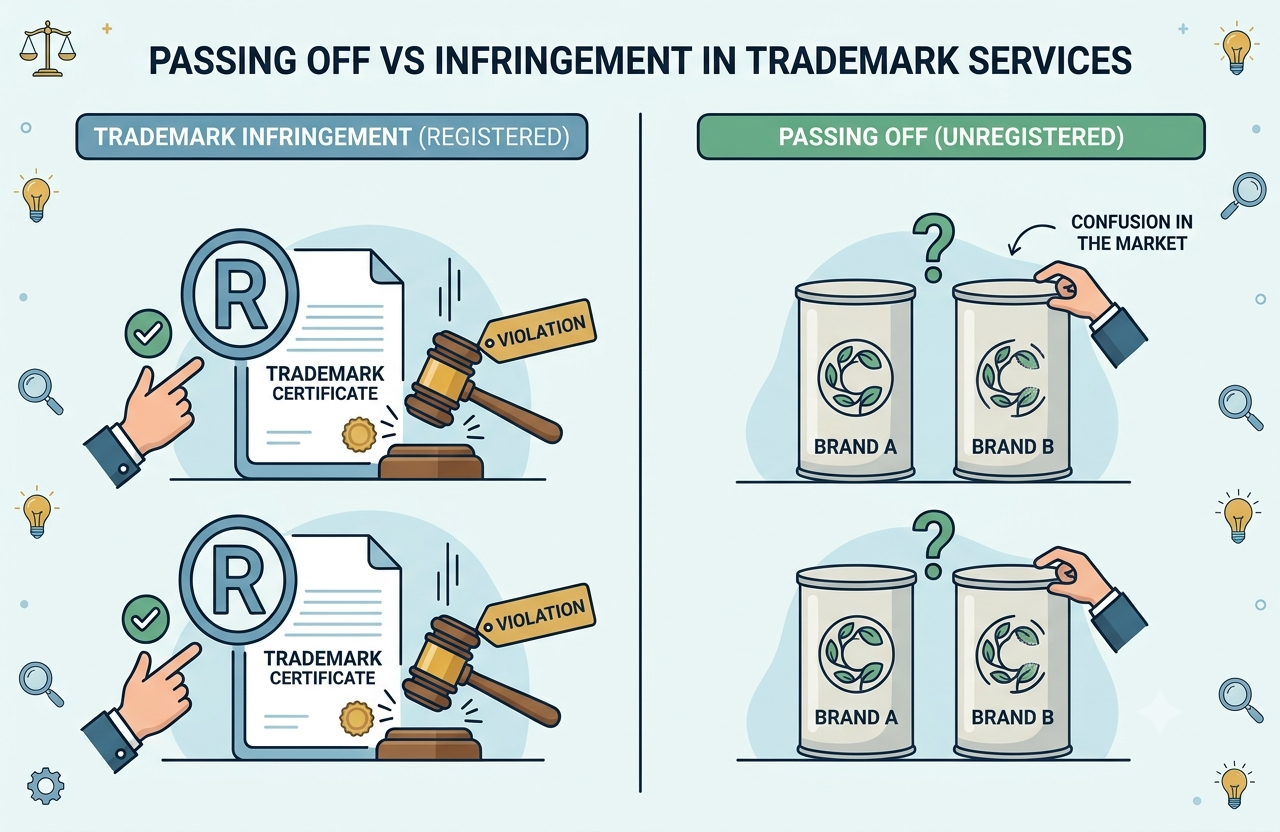
  • If Your Brand Is Registered: A registration certificate gives you legal standing to act. You can issue legal demands, initiate administrative raids, file customs seizure applications, and claim damages in civil court. Ensure your registration covers the exact classification codes the infringer operates in.


  • If Your Brand Is Not Yet Registered: Enforcing rights without a registration certificate is harder. Unfair competition laws under Federal Decree-Law No. 50 of 2022 require heavy proof of local trading history. Unregistered owners must file an expedited trademark application immediately to secure priority rights.


  • What If the Copier Filed First?: If a squatter files your mark before you, you can challenge them through official opposition proceedings. Interested parties can submit a formal objection to the Trademark Office within 30 days of the application publication in the Trademark Bulletin, relying on proof of bad faith or foreign ownership.

Step-by-Step: What to Do Immediately

When you discover an active infringer, acting systematically during the first week stops them from hiding assets, purging records, or moving inventory.

  • Step 1 – Don’t Confront the Copier Publicly: Avoid public accusations or exposing the copycat on social media. Public posts can trigger severe criminal defamation penalties under UAE Cybercrime Law (Federal Decree-Law No. 34 of 2021) and warn the infringer to destroy evidence.


  • Step 2 – Collect and Preserve Evidence: Build a solid evidence file before taking visible action.
    • Digital Proof: Take screenshots showing timestamps, full web links, social media handles, and active online listings.
    • Physical Proof: Make test purchases, keeping receipts, shipping labels, invoices with tax numbers, and original packaging intact.


    • Authentication Warning: Submitting unauthenticated or untranslated evidence causes many cases to fail. UAE authorities require all supporting documents translated into legal Arabic by a sworn, Ministry-certified translator. Getting a formal court bailiff report (proces-verbal) prevents the copycat from claiming evidence was altered.

Step 3 – Check Your Trademark Status: Confirm your registration certificate is active and unexpired. Ensure all renewal fees are paid and that your protected classes directly cover the copycat's products or services.


Step 4 – Get a Professional Assessment: Have an experienced trademark lawyer Dubai businesses trust or an IP firm assess your case. Firms like Abou Naja IP prepare similarity reports comparing visual, phonetic, and conceptual elements to prove consumer confusion for UAE authorities.

Step 5 – Send a Cease and Desist Letter: A formal cease and desist letter UAE counsel drafts serves as a direct warning. The notice must list your registration numbers, detail the infringement, demand stock destruction, cite statutory penalties under Federal Decree-Law No. 36 of 2021, and give a 7 to 14-day deadline.

Your Legal Enforcement Options in the UAE

If an infringer ignores formal warnings, you can deploy administrative, judicial, or customs enforcement pathways individually or together.

  • Administrative Complaints: File administrative complaints with the Ministry of Economy or economic bodies like Dubai DET or ADDED. These IP units can inspect premises, execute raids, seize fake stock, issue commercial fines, and temporarily close stores.


  • Customs Recordation and Border Seizures: Enrolling your registered mark via customs recordation UAE authorities operate shields at all air, sea, and land entry ports. Customs officers monitor cargo manifests, detain suspect shipments, issue inspection notices, and allow rights holders to order cargo destruction. Recordations stay valid for one year and renew annually.


  • Urgent Court Relief: When ongoing infringement threatens immediate harm, brand owners can seek urgent provisional remedies under Article 47 of the Trademark Law. An application filed with the Civil Court Magistrate of Summary Justice can secure rapid orders to freeze assets, seize goods, and impound production tools.


  • Civil Lawsuit for Damages: Under Article 48 of Federal Decree-Law No. 36 of 2021, you can file a civil lawsuit for permanent injunctions, public retractions, and financial compensation. Courts often appoint accounting and IP experts to calculate lost profits and brand damage.


  • Criminal Complaint for Counterfeiting: For aggressive commercial counterfeiting, filing a criminal complaint with police or Public Prosecution triggers formal criminal investigations. Law enforcement officers execute search warrants, confiscate manufacturing equipment, and refer offenders for trial.

Penalties for Brand Copying in the UAE

Articles 49 through 52 of Federal Decree-Law No. 36 of 2021 create strong statutory deterrents against brand infringement and counterfeiting.

  • Heavy Financial Fines: Convictions for forging, counterfeiting, or knowingly using unauthorized marks carry fines ranging from AED 50,000 to AED 1,000,000.
  • Imprisonment: Deliberate counterfeiting or bad-faith mark usage carries prison terms depending on offense severity.


  • Doubled Repeat Penalties: Financial fines and prison limits are mandatorily doubled for repeat offenders who commit another infringement within five years.


  • License Revocation: Courts hold the statutory power to order the mandatory suspension or permanent revocation of the copycat's commercial license.


  • Stock Destruction: Courts regularly order full destruction of seized goods, forfeiture of equipment, and public publication of convictions in regional newspapers at the offender’s expense.

What If Your Brand Is Copied Online?

Online infringement moves fast, requiring rights holders to combine administrative legal remedies with platform takedowns.

  • Social Media Impersonation: Submit takedown requests using platform IP reporting tools when unauthorized accounts copy your identity on Instagram, TikTok, LinkedIn, or Facebook. Attach your trademark registration certificate and ensure digital evidence is notarized beforehand.


  • E-Commerce Marketplaces: GCC marketplaces like Amazon.ae and Noon.com maintain specialized brand protection programs. Rights holders with verified registration certificates can secure listing takedowns within 48 to 72 hours. Pair digital takedowns with administrative complaints to stop suppliers from opening new seller accounts.


  • Domain Names: If a third party registers a .ae domain using your brand name, file a complaint under the UAE Domain Name Dispute Resolution Policy (UAE DRP), administered by WIPO and regulated by the TDRA. You must show the domain is confusingly similar, the holder lacks legitimate rights, and it was registered in bad faith.

Special Scenarios

  • Ex-Partners, Distributors, or Employees: When former agents, distributors, or employees continue using your brand after contract termination, combine trademark law claims with breach-of-contract remedies under Federal Decree-Law No. 50 of 2022 (Commercial Transactions Law). The law bars former agents from retaining principal marks after agreements end.


  • Free Zone Copycats: Federal IP laws apply across all UAE territories, including Free Zones like JAFZA, DAFZA, and KIZAD. While Free Zone authorities have internal compliance teams, customs recordation remains your best defense against transshipments through tax-exempt trade zones.


  • Brands Registered Abroad Only: Foreign registrations do not automatically protect you locally due to territoriality rules. However, if your origin country is in the Madrid System, you can extend coverage to the UAE via an International Registration. Globally recognized marks can also invoke well-known mark protections under Article 4.

How Long Does It Take and What Does It Cost?

Timelines and costs vary based on the enforcement route, case complexity, and the copycat's compliance.

  • Marketplace Takedowns: Processed within 2 to 3 business days via platform IP portals.


  • Urgent Injunctions (Article 47): Issued by the Magistrate of Summary Justice in 3 to 10 days.


  • Administrative Raids: Executed by Dubai DET or ADDED inspection units in 2 to 8 weeks.


  • Full Civil Litigation: Typically takes 3 to 12 months from initial filing to judgment.


  • Fees and Recovery: Administrative filings and customs recordations carry modest official fees. 

Contested court litigation, expert reports, legal translations, and counsel representation involve higher investments, subject to 5% VAT. Prevailing parties can ask courts to order defeated copycats to cover court fees and legal costs.

How to Prevent Brand Copying in the Future

Proactive IP management is far cheaper than resolving active market infringement disputes. Protect your brand using these strategic steps:

  • File Early: Register your trademarks across target markets and classes immediately to secure priority rights under the UAE's first-to-file system.


  • Maintain Customs Recordation: Enroll your marks with UAE customs authorities and renew filings annually to maintain border interdiction capabilities.


  • Set Up Market Monitoring: Monitor trademark gazettes, e-commerce platforms, social networks, and domain registries to spot unauthorized filings early.


  • Draft Clear Contracts: Ensure distribution, licensing, employment, and agency contracts explicitly designate sole ownership of brand assets to your parent company upon termination.

How Abou Naja IP Can Help

Protecting IP assets requires specialized local knowledge and prompt legal execution. Operating across the Middle East and North Africa since 1971, Abou Naja IP brings over five decades of regional experience.

  • End-to-End Protection: Our team handles similarity assessments, Ministry-certified legal translations, cease and desist letters, and full litigation representation.


  • Multi-Agency Execution: We file administrative complaints with Dubai DET and ADDED, manage annual customs recordations, and initiate civil and criminal actions.


  • Expert Consultation: If another business is misusing your registered mark, or if you want to fortify your IP portfolio, contact Abou Naja IP today to schedule a formal consultation.


what if someone copies a brand in uae

Frequently Asked Questions

1. Can I take action if my trademark isn’t registered in the UAE?

Options are limited under the first-to-file rule. Unregistered owners must rely on unfair competition principles or establish well-known mark status, requiring heavy proof. Filing an expedited UAE trademark application should be your immediate priority.

2. How do I know if someone’s logo is “too similar” to mine?

Similarity depends on likelihood of consumer confusion. If an average buyer comparing design, phonetics, colors, or offerings could mistake the copy for your brand, it is infringing. IP firms prepare formal similarity reports to establish confusion.

3. Do I need a lawyer to send a cease and desist letter in the UAE?

It is not mandatory, but letters drafted by legal counsel carry far more weight. Professional notices cite specific provisions of Federal Decree-Law No. 36 of 2021, set firm deadlines, and lay procedural groundwork for court claims.

4. Can I claim compensation for lost sales?

Yes. Civil claims under Article 48 allow rights holders to seek damages for lost revenues, brand dilution, and commercial disruption. Courts routinely appoint financial experts to examine commercial ledgers and compute losses.

5. Can customs stop counterfeit goods before they enter the UAE?

Yes. Registering your mark with customs enables border officers across entry ports to screen manifests, detain suspect cargo, and issue destruction orders automatically without requiring you to track individual shipments.

6. Is copying a brand a criminal offence in the UAE?

Yes. Intentional counterfeiting and trading in fake goods are criminal offenses under Articles 49 through 52 of the Trademark Law. Penalties include prison terms and fines between AED 50,000 and AED 1,000,000.

7. What should I do if someone registered my brand name before me?

You can challenge the application by filing an administrative opposition within 30 days of its publication in the Trademark Bulletin. Alternatively, you can file a court action to cancel bad-faith registrations based on prior foreign ownership or contracts.

Conclusion

Protecting your brand when someone copies it in the UAE comes down to moving quickly, preserving proper evidence, and selecting the right enforcement pathway for your situation. Because trademark registration is the essential foundation for fast enforcement in a first-to-file jurisdiction, securing your registration or applying immediately is critical to staying protected. 

If your brand has already been copied, consulting an experienced intellectual property firm early will ensure your rights are properly defended. Abou Naja IP is ready to assess your situation and help you take decisive action.

分享这篇文章