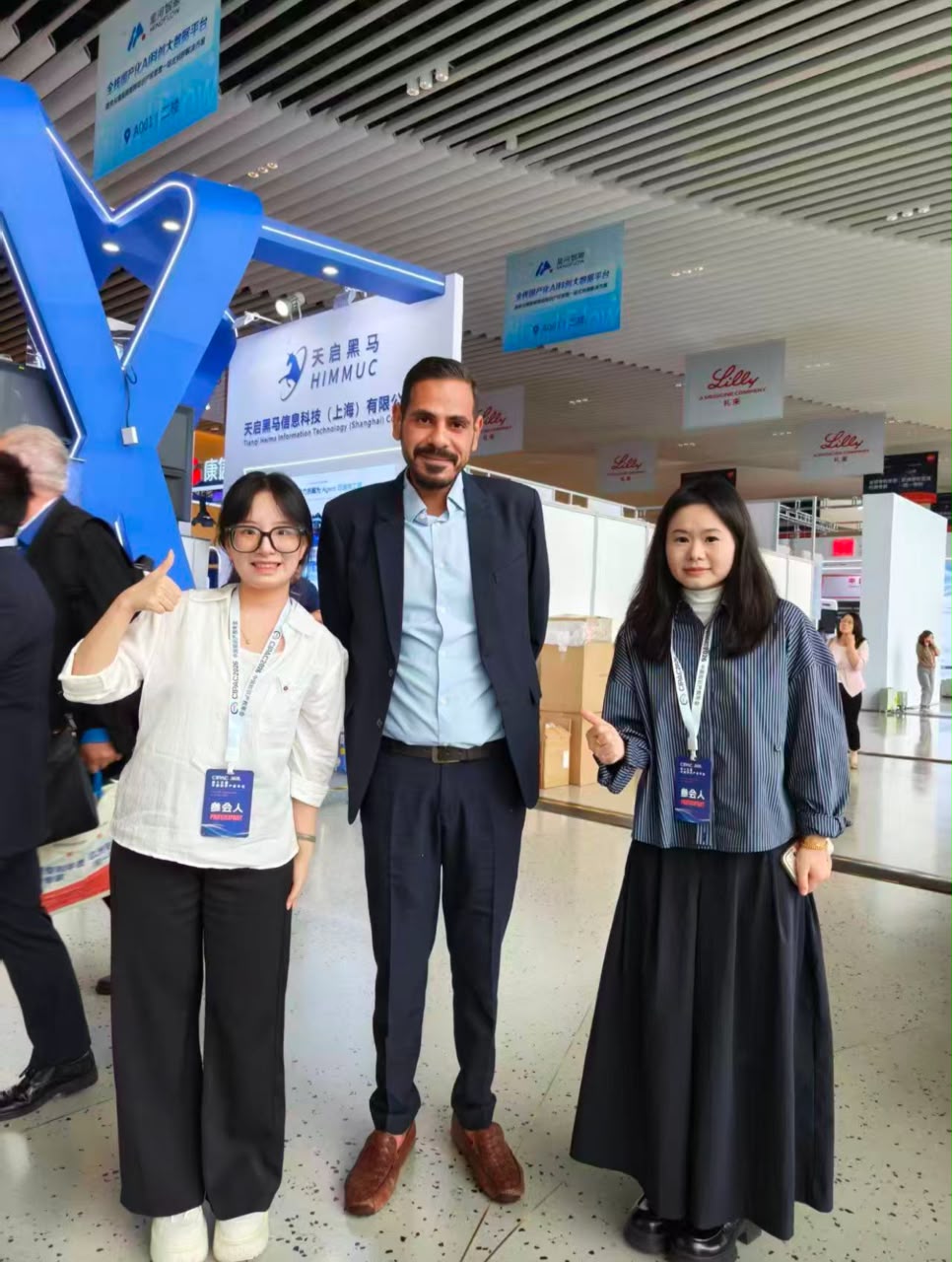
Abou Naja Intellectual Property participated in the 15th China Intellectual Property Annual Conference, held on 8 and 9 September at the China National Convention Center Phase II in Beijing. CIPAC is one of China's major intellectual property gatherings, bringing together IP authorities, law firms, IP agencies, corporate IP professionals, technology companies and international practitioners.
For Abou Naja IP, the conference formed part of a wider China engagement strategy aimed at advancing intellectual property protection in the Middle East. The firm's goal is to strengthen relationships with leading Chinese IP firms and to support Chinese companies as they expand and safeguard their assets across the GCC and the broader MENA region.
Summarising the firm's mission in Beijing, Mr. Abdul Rahman noted:
"Chinese businesses are increasingly international in their ambitions. The Middle East, GCC and North Africa present significant opportunities, but navigating these markets requires local knowledge and regional coordination. Our objective is to make IP protection across these markets simpler, more coordinated and more commercially effective for Chinese companies and their advisers."
The Strategic Drivers of China and MENA Expansion
The growth in cross-border IP activity reflects broader economic alignment. Expanding bilateral trade, Belt and Road Initiative infrastructure projects, and foreign direct investment into Saudi Arabia's Vision 2030 programme and the United Arab Emirates are driving enterprise expansion. Leading sectors include electric vehicles, renewable energy infrastructure, consumer hardware, telecommunications, and digital entertainment.
For Chinese companies entering the Middle East, protecting these assets requires specialised technical management across varied legal systems.
CIPAC 2026: Operational Realities in the GCC
1. Optimising Complex Regional Filing Routes
Chinese patent and trademark attorneys need clarity on regional filing mechanisms. Saudi Arabia's accession to the Madrid Protocol will take effect on 8 October 2026, after which five of the six GCC states (the UAE, Saudi Arabia, Bahrain, Oman, and Qatar) will participate in the Madrid System. Kuwait remains outside the system, and direct national filing stays the mandatory route there.
Patent protection across the GCC also requires jurisdiction-specific planning. The GCC patent landscape has undergone significant changes, making national patent strategies increasingly important. Depending on the jurisdiction and circumstances, applicants may pursue national filings or national-phase entry under the Patent Cooperation Treaty. Chinese applicants therefore need a coordinated strategy covering the individual GCC markets in which protection is required.
Understanding when to leverage international filing systems versus direct national routes is critical to control prosecution costs and secure enforceable rights.
2. Overcoming Local Legal Hurdles in Brand Clearance
Entering the Middle East involves practical requirements that can slow down unassisted foreign filings. Trademark clearance requires both phonetic transliteration and local meaning checks in Arabic to prevent squatting and avoid cultural conflicts. Furthermore, Power of Attorney notarisation and consular legalisation standards vary across GCC states. Local coordination ensures formal documents are validated without missing strict filing deadlines.
3. The Operational Edge of a Single Regional Partner
Managing IP portfolios across the GCC can require Chinese IP firms to coordinate with different local associates, filing procedures, billing arrangements and communication channels across multiple jurisdictions.
Abou Naja offers an integrated regional approach, providing a single relationship for coordinated IP support across all six GCC countries and the wider MENA region, with centralised docketing and consistent prosecution strategies across every office. This establishes a stronger foundation for intellectual property protection in the Middle East.
4. Eliminating Friction with Dedicated China Support
Prompt communication is critical during urgent prosecution deadlines and enforcement actions. Abou Naja provides direct support to eliminate time zone delays and language barriers, giving Chinese firms access to professionals familiar with the working practices of Chinese IP firms, combined with detailed knowledge of patent and trademark procedures across Middle Eastern jurisdictions.
5. Moving from Networking to Reciprocal Partnerships
Discussions in Beijing moved quickly from introductory meetings to practical cooperation. Conference interactions and follow-up meetings focused on concrete arrangements, including trial instructions, reciprocal filing protocols, and joint strategies for anti-counterfeiting and customs recordal.
Securing Innovations Across the Middle East
As Chinese enterprises continue their global expansion, Abou Naja Intellectual Property provides the legal infrastructure and technical expertise needed to ensure comprehensive intellectual property protection in the Middle East.
To discuss multi-jurisdiction filing strategies or request our comparative GCC trademark and patent filing guide, contact our dedicated China desk through our website.
FAQs
1. What is CIPAC?
CIPAC, the China Intellectual Property Annual Conference, is one of China's most significant IP events, bringing together IP authorities, law firms, agencies, corporate professionals and international practitioners. The 2026 edition, the 15th annual conference, was held on 8 and 9 September at the China National Convention Center Phase II in Beijing.
2. Why did Abou Naja IP attend CIPAC 2026?
Abou Naja IP attended as part of its wider China engagement strategy, aimed at strengthening relationships with leading Chinese IP firms and supporting Chinese companies as they expand and protect their intellectual property across the GCC and MENA region.
3. Why do Chinese companies need IP protection in the GCC and MENA region?
As Chinese companies expand their trademark, patent and enforcement activities beyond their home market, they need reliable partners who understand the legal and regulatory landscape of the countries they are entering.
4. Why use one regional IP partner instead of several local agents?
Coordinating IP matters through separate local agents in different countries can slow the process and add complexity. A single firm covering all six GCC countries and the wider MENA region gives Chinese companies one coordinated point of contact instead of several relationships to manage.
5. Which countries does Abou Naja IP cover across the GCC?
Abou Naja IP covers all six GCC countries and the wider MENA region, giving Chinese companies and their IP advisers a single regional relationship rather than a patchwork of local agents.
6. How can Chinese IP firms partner with Abou Naja IP on outbound work?
Chinese IP firms managing outbound IP work for domestic clients can work directly with Abou Naja IP as their associate for GCC and MENA matters. Conversations at CIPAC 2026 pointed to strong interest in practical, reciprocal arrangements, including referrals, trial instructions and exchanges of company profiles and regional capabilities.
Abou Naja IP welcomes the opportunity to continue the conversations started at CIPAC 2026, so feel free to reach out if you would like to explore how our firm can support your intellectual property strategy across the Middle East, GCC and North Africa.