Copyright is a form of Intellectual Property (IP) that protects original works of authorship such as literature, music, and software. In today’s digital world, creators have endless opportunities to share their work but they also face growing threats like copyright infringement and piracy. Understanding what copyright is and how it protects your work is more important than ever.
Only copyright registration can prevent the serious menace of piracy. To understand the importance of copyrights, it is essential to check its basics:
What is a copyright?
How to protect creative works through copyrights?
Let us dive in:
What is Copyright and How Does It Work?
The primary goal of copyrights is to promote the creation and dissemination of creative works for public benefit.
What copyright protection includes:
Literary works (novels, poems, plays, reference works, newspaper articles etc.)
Computer programs, databases
Films, musical compositions, and choreography
Paintings, drawings, photographs, and sculpture
Architecture
Advertisements, maps, and technical drawings
Everything on Copyright law
Copyright law is a form of legal protection granted to creators of original works, including literature, music, art, films, software, and other creative expressions. It gives the creator exclusive rights to reproduce, distribute, display, perform, and adapt their work, as well as to authorize others to do so.
Modern copyright law has evolved through several key milestones across the world:
Statute of Anne (1710) – Enacted in Britain, this is widely regarded as the first true copyright law. It granted authors rights for 14 years, with a possible 14-year renewal.
Berne Convention (1886) – An international agreement establishing that copyright protection is automatic across member countries without formal registration. It remains the backbone of global copyright cooperation, with over 180 signatory countries today.
Copyright Act, 1976 (USA) – Effective January 1, 1978, this modernized US copyright law, extending protection to the life of the author plus 50 years.
Sonny Bono Copyright Term Extension Act (1998) – Extended US copyright terms to life plus 70 years for individual works, and 95 years from publication for corporate or work-for-hire creations.
Digital Millennium Copyright Act / DMCA (1998) – Addressed digital piracy and introduced the takedown-notice system still used by platforms like YouTube and Instagram today.
WIPO Copyright Treaty (1996) – Extended international copyright protections to cover computer software and databases in the emerging internet era.
Copyright Act, 1957 (India) – India's governing copyright law, amended multiple times, most notably in 2012 to address digital rights and align with WIPO treaties. It grants protection for the author's lifetime plus 60 years.
Together, these laws form the legal backbone that governs how creative work is protected, shared, and monetized across borders in the digital age.
What are the limitations of copyright
While copyright protection is broad, it does have limitations. Understanding the limitations of copyright protection helps clarify what can and cannot be legally enforced. It basically protects creative expressions and not,
Ideas
Procedures
Methods of operation
Mathematical concepts
Slogans or logos
Simple geometric shapes
List of ingredients
Who is the owner of a copyright?
Typically, copyright protection grants ownership to the original creator of the work.
Who cannot own a copyright?
The creator cannot own a copyright if he or she:
Created the work during their job (in this case, the employer is the copyright owner)
The work was commissioned and the right belongs to the buyer
The ownership was sold or transferred to another party (the recipient is the owner in such cases)
What work can be copyrighted?
A work of authorship becomes eligible for copyright protection if it meets two criteria:
When the work is independently created and not copied from a previous work. This requirement is not comparable to the ‘novelty’ or non-obviousness requirement under the patent regime.
When t the work of authorship is fixed in a tangible medium of expression. It means the work is fixed on a medium that allows it to be perceived, reproduced, or otherwise communicated.
Importance of Copyright
Grants creators the exclusive right to use, reproduce, and distribute their copyrighted work
Serves as an incentive for innovation and creativity
Provides the creators with economic incentives for their efforts
Prevents infringement or piracy
Ensures your IP rights remain yours
Allows creators to monetize it
When does copyright protection commence?
Technically, copyright protection begins as soon as the creator creates the work in a tangible medium. However, for legal purposes, it is advisable to conduct copyright registration as soon as possible.
What is copyright infringement?
Copyright infringement occurs when someone uses, reproduces, or distributes a copyrighted work without the creator’s permission. It’s one of the most serious risks creators face in the digital age. Understanding what constitutes copyright infringement is key to protecting your intellectual property.
Creating a derivative work from a copyrighted work without authorization is also considered copyright infringement.
It is a good idea to learn from some top copyright infringement cases.
Can I use copyrighted material without permission?
Generally, people are not allowed to use a copyrighted work without obtaining permission from the copyright owner. However, in some cases, the use of copyrighted works is possible if the user meets the ‘fair use’ conditions.
In this case, it is advisable to consult with an IP agent or attorney for advice.
Copyright vs trademark vs patent
What is the difference between copyrights, trademarks and patents?
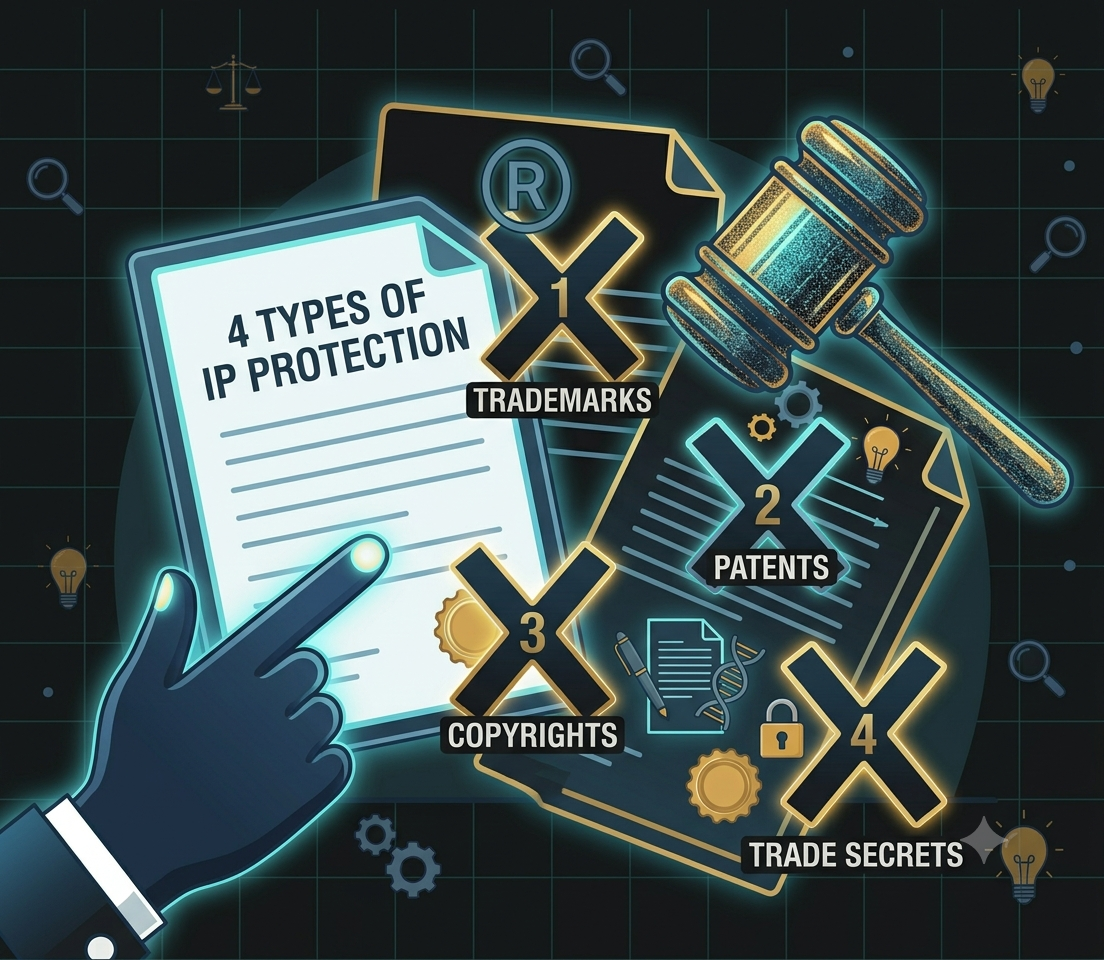
| Copyrights, Protects original works like books, films, publications, photographs .
| Trademarks, Protects the brand of a source of goods or services such as distinctive names, logos, fonts and slogans.
| Patents, Protects inventions that are original.
Why You Should Register Your Copyright
You may wonder why you should register your work if copyright protection is automatic.
Of course, copyright protection automatically kicks off the moment your work is created. Registration is not mandatory for protecting a work of authorship. However, more aspects define the importance of copyrights and therefore, registration is highly recommended.
Some of the copyright registration benefits include:
Power to act against infringement: You can file a lawsuit against an infringer
Proof of validity: Registration serves as an evidence to prove your copyright is valid
Statutory Damages: Copyright registration enables you to claim statutory damages and the fee of the IP attorney
Stop Importation of Pirated Works: If someone is importing pirated versions of your work, copyright registration helps you stop the importation.
Consequences of Not Registering Copyrights
Since copyright registration is automatic, you may refrain from performing it. However, you may rethink after reading the following consequences of not registering copyrights:
Lesser chances of reproducing the original work as opposed to those who registered the work
Difficult to prove ownership over the work
Higher risk of unauthorized copying or reproducing
Difficult to take infringers to court
Creating a Strategy for Copyright Protection
If you are keen on protecting your original works, it is imperative to develop a strategy. A robust copyright strategy will include the following elements:
Have an accurate idea of “What is a copyright?”
Understand the importance of copyrights.
Set a clear objective.
Conduct copyright registration
Allocate adequate resources for copyright protection and enforcement
Register and enforce copyrights in foreign markets
Final Thoughts: What is Copyright and Why You Should Protect It
This guide has not only explained what copyright is, but also shown you how copyright protection can safeguard your creative work. From understanding the basics to learning the value of copyright registration, we hope you now feel better equipped to protect your intellectual property.
Now, you need to think about practically applying this guidance to your work. Unregistered copyrights offer no benefit to your work. Infringers can use, reproduce or distribute your works without your permission.
Registering your copyrights in relevant jurisdictions is the best way to ensure 100% protection for your creative works. Registered copyrights also validate your ownership over a work. Abou Naja Intellectual Property can help you register your copyrights. We are one of the top copyright firms in the Middle East with more than 50 years of experience.
If you have an original work that warrants copyright protection, email us at [email protected]